Intercom
 Shopify
 Stripe
 Slack
Slack Notion
 Google Workspace
 Confluence

What Are the Best Help Scout Alternatives in 2026, Including Free and Self-Hosted?


The strongest Help Scout alternatives in 2026 are Zendesk and Freshdesk from $19 an agent a month, Front and Hiver from $25, Gorgias from $40 a month for 50 tickets, and FreeScout as a free self-hosted work-alike. Help Scout still has a free plan for 5 users and 100 contacts a month, and its paid plans cost $25, $45 and $75 a user a month on annual billing.
Key takeaways
- The strongest Help Scout alternatives in 2026 include Zendesk and Freshdesk from $19 an agent a month, Front from $25 a seat, and FreeScout as a free self-hosted option.
- Help Scout's Free plan covers 5 users, 1 inbox, 1 Docs site, 10 articles and 100 contacts a month, and the 100-contact cap is usually the first limit a team hits.
- Help Scout's paid plans cost $25, $45 and $75 a user a month on annual billing, or $30, $54 and $90 monthly, with AI Answers at $0.75 a resolution.
- Intercom's Essential plan is $29 a seat billed annually, and Fin's 50-outcome monthly minimum applies only when Fin runs on a help desk other than Intercom.
- Gorgias bills by ticket volume rather than seats, starting at $40 a month for 50 tickets, with $1.50 charged per automated interaction past the included allowance.

The best Help Scout alternatives in 2026 are Zendesk (Support Team from $19 an agent a month), Freshdesk ($19), Front ($25 a seat), Hiver ($25 a user), Gorgias ($40 a month for 50 tickets), Intercom ($29 a seat), Zoho Desk (free for 3 users), Crisp and Tidio, plus FreeScout if you want a free self-hosted work-alike. Help Scout itself still has a free plan for 5 users, and its paid plans cost $25, $45 and $75 a user a month on annual billing. Prices below come from each vendor's live pricing page, checked September 20, 2026, with Intercom, Zendesk AI and Freshdesk rechecked on September 24, 2026.
How do the best Help Scout alternatives compare on price?
| Tool | Starting price (checked 2026-09-20) | Free tier | Best for | vs Help Scout |
|---|---|---|---|---|
| FreeScout | $0 self-hosted, paid modules | Yes, open source | Teams who can run a server | Same shape, no seat bill, you do the ops |
| Chatwoot | $0 (2 agents), then $19/agent | Yes | Open-source teams wanting chat too | More channels, self-hostable |
| Zoho Desk | Free for 3 users, then a quote in your currency | Yes | Budget teams in the Zoho stack | Deeper and cheaper; busier UI |
| Freshdesk | $19/agent/mo annual | No free plan; 14-day trial, Free program for up to 2 agents for 6 months | Teams that live in ticketing | More automation; busier interface |
| Zendesk | $19/agent/mo (Support Team) | No | Scaling teams wanting depth | Far more configurable; heavier |
| Front | $25/seat/mo annual | No | Collaborative, email-heavy operations | More channels and collaboration; pricier |
| Hiver | $25/user/mo annual | No, 7-day trial | Gmail-native small teams | Lives inside Gmail; lower ceiling |
| Gorgias | $40/mo for 50 tickets | No | Shopify and DTC ecommerce | Ecommerce-native; not for non-retail |
| Intercom | $29/seat/mo annual plus Fin at $0.99 an outcome | No | SaaS, chat-led, AI-first | Stronger AI; less predictable bill |
| Crisp / Tidio | $0, then $45 flat or $24.17 | Yes | Small teams wanting chat and automation | Chat-first; lighter ticketing |
A disclosure: we make an AI agent layer called Macha. It doesn't integrate with Help Scout, it isn't counted in the nine, and it gets one clearly marked section that says where it does and doesn't apply.
Why do teams look for a Help Scout alternative?
Help Scout isn't broken. It's deliberately simple, and four recurring frictions push teams to look elsewhere. Some don't require leaving at all.
Reporting runs shallow. The most consistent theme in reviews is that once you want granular dashboards, custom reports or a view across months, the built-in analytics feel limited next to Zendesk, Zoho Desk or Freshdesk.
Automation and routing have a ceiling. Workflows and saved replies are handled well. Complex routing, granular SLAs and heavy rules-based automation are where dedicated help desks pull ahead, and process-heavy teams outgrow it.
The price went up, and people noticed. Paid plans are $25, $45 and $75 a user a month on annual billing, or $30, $54 and $90 monthly, with AI Answers at $0.75 a resolution on top. The r/SaaS thread titled "HelpScout is significantly raising its prices out of nowhere" is what this section is really about, and there's a matching r/Freescout thread on migrating from Help Scout to FreeScout. Reddit blocks our crawler, so both are linked rather than quoted.
Channel coverage is lighter. Email, Docs and the help widget are solid. If your support skews to live chat at scale, social, voice or ecommerce order data, tools built around those channels do more out of the box.
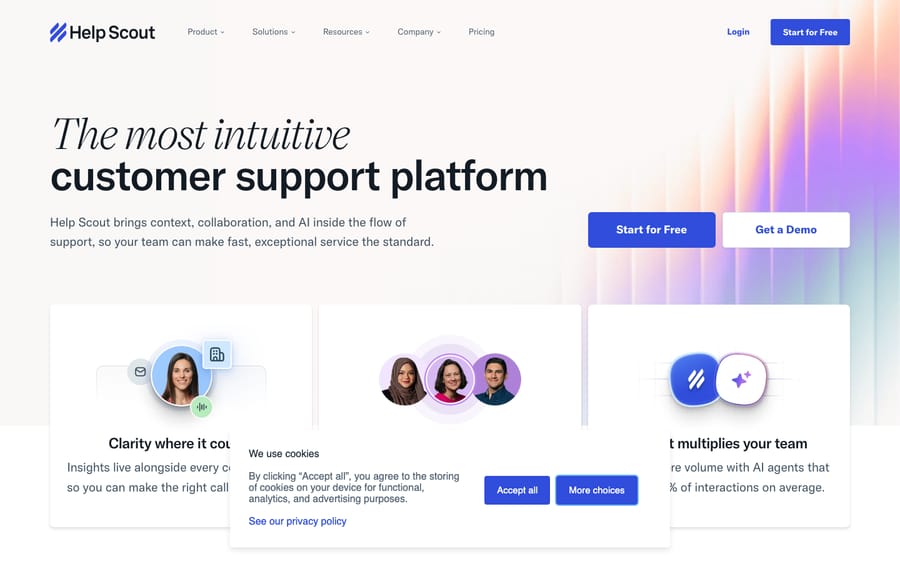
What does Help Scout's free plan include?
Help Scout's Free plan still exists, and many teams shopping for alternatives assume it's gone.
| Free plan limit | Value |
|---|---|
| Users | 5 |
| Inboxes | 1 (extra inboxes $10/mo annual, $12 monthly) |
| Docs sites | 1 (extra sites $20/mo annual, $24 monthly) |
| Articles | 10 |
| Contacts | 100 per month |
| Saved replies | 10 |
| Tags | 10 |
| Live chat | Not on Free; it's a Standard feature |
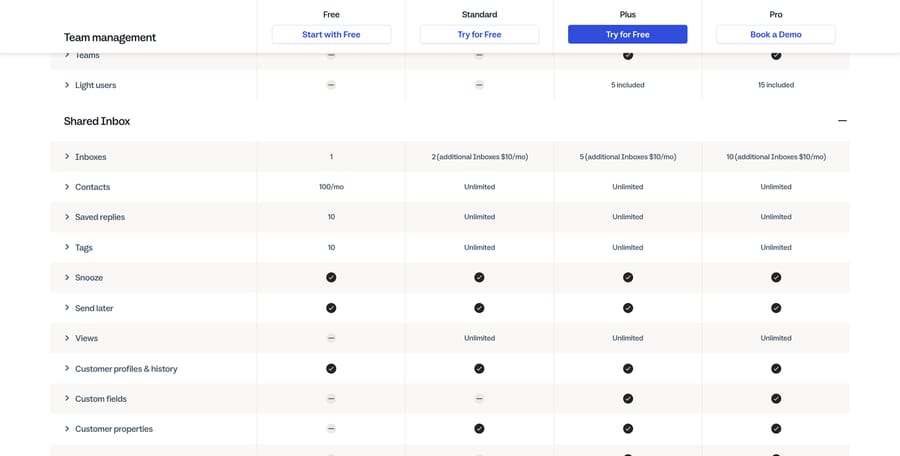
The cap that bites first is contacts, not users. One hundred contacts a month is about five a working day, so any team with real inbound passes it inside a month and lands on Standard at $25 a user. The 10-article limit on Docs bites second.
Capping a free plan on unique contacts instead of seats means the free tier expires with your growth instead of your headcount, so the free plan earns the vendor an upgrade exactly when your business works, which is the one variable you have least control over. A seat cap you can manage by being careful about who gets a login; a contact cap you cannot manage at all without turning customers away.
What are the free and self-hosted Help Scout alternatives?
If price is your reason, three options cost nothing or close to it.
FreeScout is the one the migration threads name. It's an open-source PHP and Laravel help desk built as a Help Scout work-alike, and its own site is direct about the terms: "Unlimited support agents, tickets, mailboxes, etc." The core is free, paid modules sit on top, and it runs on shared hosting, which is why small teams pick it over heavier self-hosted options.
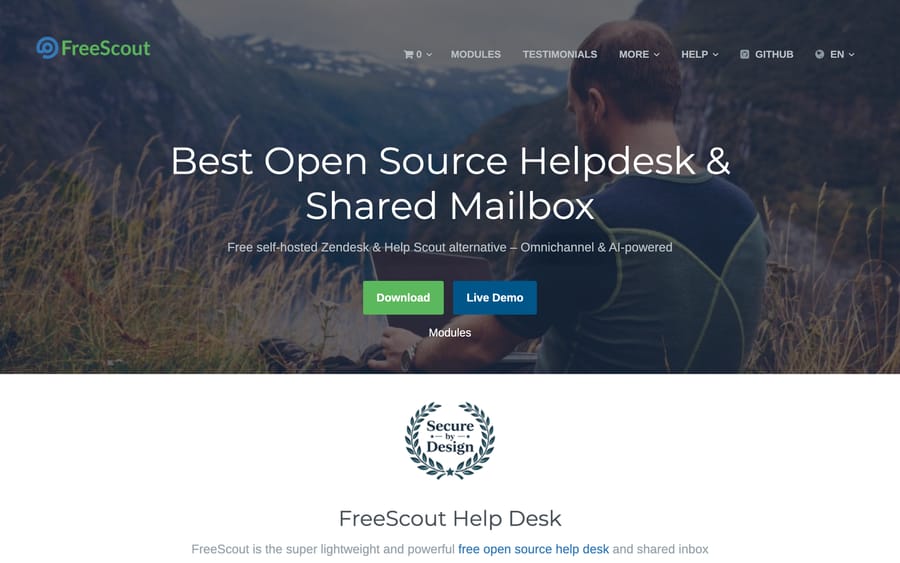
The trade is the one every self-hosted tool makes: you own the server, the upgrades and the backups. That's a good deal for a team with someone technical and a bad one for a two-person support team whose scarce resource is time.
Chatwoot is the other open-source option, and it does more channels. Its cloud Hacker plan is $0 for 2 agents and 500 conversations a month on live chat only, and self-hosting removes both caps and adds the help center. Our Chatwoot explainer covers what running it involves, and the wider field is in open-source ticketing systems.
Zoho Desk's Free Edition is the commercial $0 option. Zoho describes it as free forever with three user licenses and email ticketing out of the box. We can't quote Zoho's paid dollar prices here, because its pricing page geolocates and served us rupees in both a scripted fetch and a real browser session; the free tier is currency-neutral, so it's the part we can state.
Crisp Free (2 seats) and Tidio Free (50 billable conversations a month) are chat-led rather than inbox-led, and both are covered in our free live chat roundup.
How did we compare the tools?
We focused on tools a Help Scout team could realistically move to: full help desks, collaborative shared inboxes, an ecommerce specialist and chat-first apps. For each one we checked the price on the vendor's own live pricing page on September 20, 2026 and captured screenshots the same day, including Help Scout's monthly toggle, which its server-rendered page hides behind a click.
Two pages resisted: Zoho's geolocates to rupees, and Hiver's put a Cloudflare interstitial in front of our screenshot run, so Hiver's figures come from the page HTML rather than a capture. G2's review pages are bot-walled, so the three attributed quotes below come from Capterra, with the dates they were posted. We did not migrate a real inbox onto any of these tools for this guide.
The 9 best Help Scout alternatives
1. Zendesk, the enterprise-grade upgrade
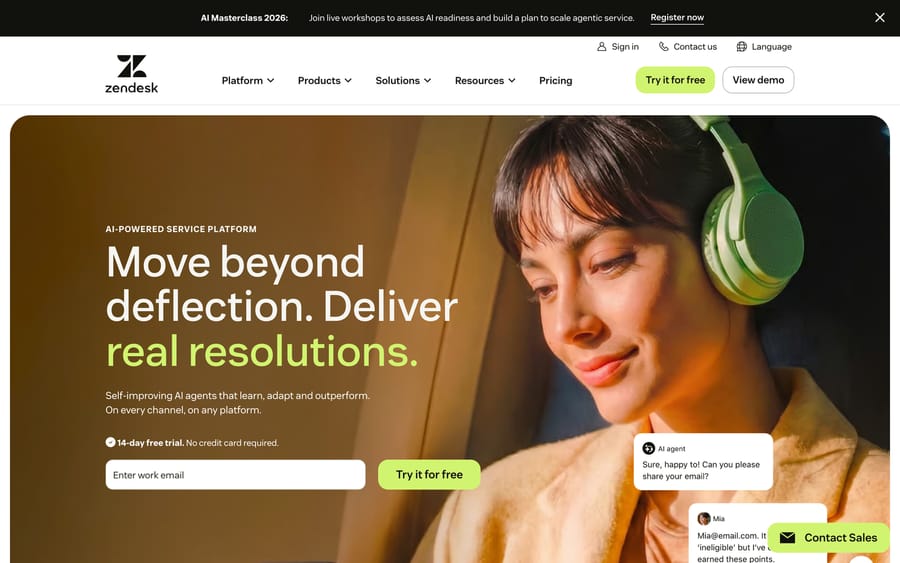
A deep, extensible support platform with omnichannel ticketing, a mature app marketplace, real reporting in Explore, and native AI agents. Support Team is $19 an agent a month on annual billing, Suite Team $55 and Suite Professional $115, with AI agents included and billed per automated resolution. Zendesk's pricing page lists that rate: $1.50 per committed resolution or $2.00 pay-as-you-go. Its plan table includes 5 automated resolutions per agent a month on Support Team and Suite Team and 10 on Suite Professional, which Zendesk's help center describes as a monthly dollar allowance per seat of $2, $5 or $10 depending on plan (since May 18, 2026, capped at $5,000 a year), and Copilot is $50 an agent a month on Suite Professional and above. It suits teams that hit Help Scout's reporting and automation ceiling and have the budget. It's heavier to set up and its AI carries its own meter.
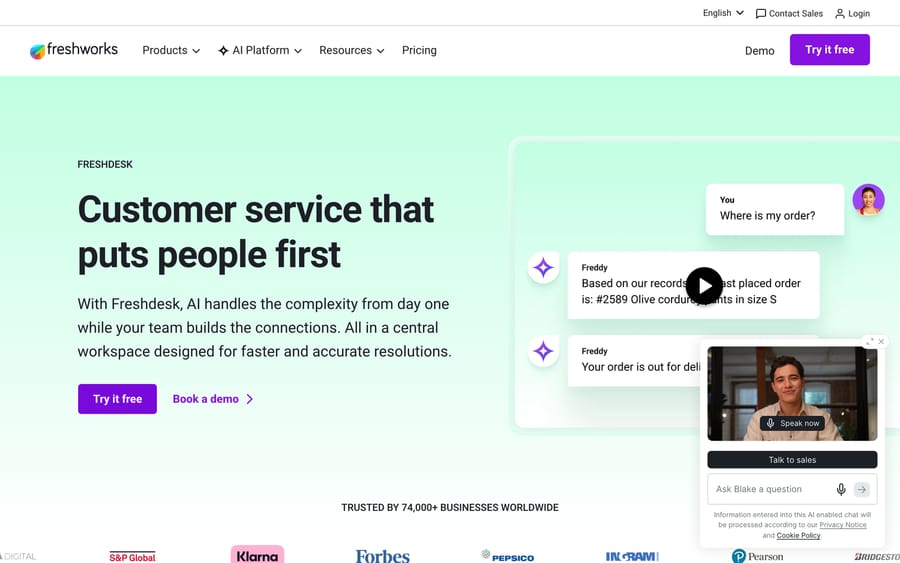
2. Freshdesk, the affordable, scalable ticketing system
Omnichannel ticketing, automation, SLAs, a knowledge base and the Freddy AI add-on. Growth is $19 an agent a month on annual billing, Pro $55 and Enterprise $89, or $23, $66 and $107 monthly. Freshdesk's pricing page no longer lists a free plan; there's a 14-day trial, and a separate Free program covers up to 2 agents for 6 months. Freddy AI Agent comes with 500 sessions as a one-time allowance per account, then $49 per 100 sessions. It suits cost-conscious teams that want automation depth without Zendesk pricing, at the cost of a busier interface.
3. Front, the collaborative shared inbox
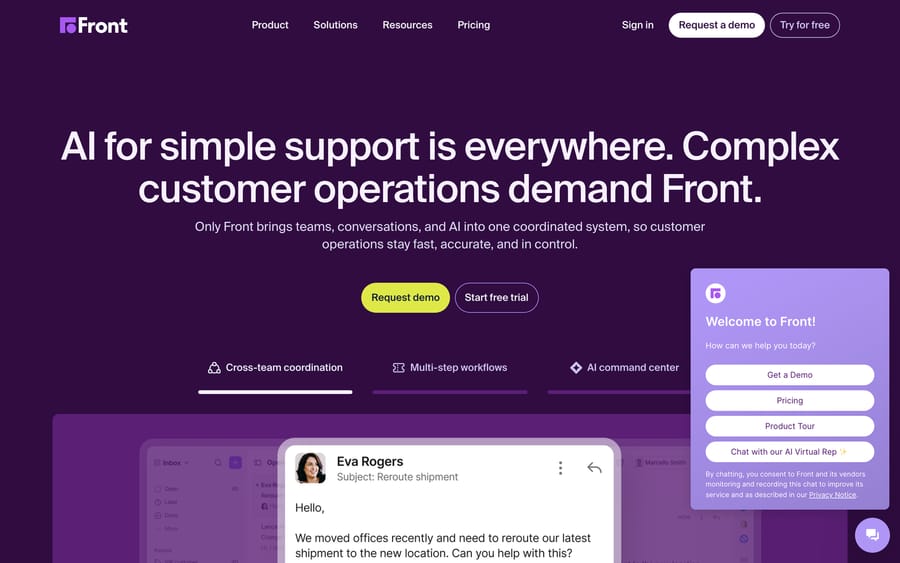
A shared-inbox platform that blends email, chat, SMS and social into one workspace with internal comments, assignments and shared drafts. Starter is $25 a seat a month on annual billing, Professional $65 and Enterprise $105, with Autopilot from $0.05 a conversation. It's the closest in spirit to Help Scout and goes further on channels and collaboration. It suits operations-heavy teams in logistics, finance and B2B services, and it's overkill for a tiny one.
4. Zoho Desk, the budget powerhouse
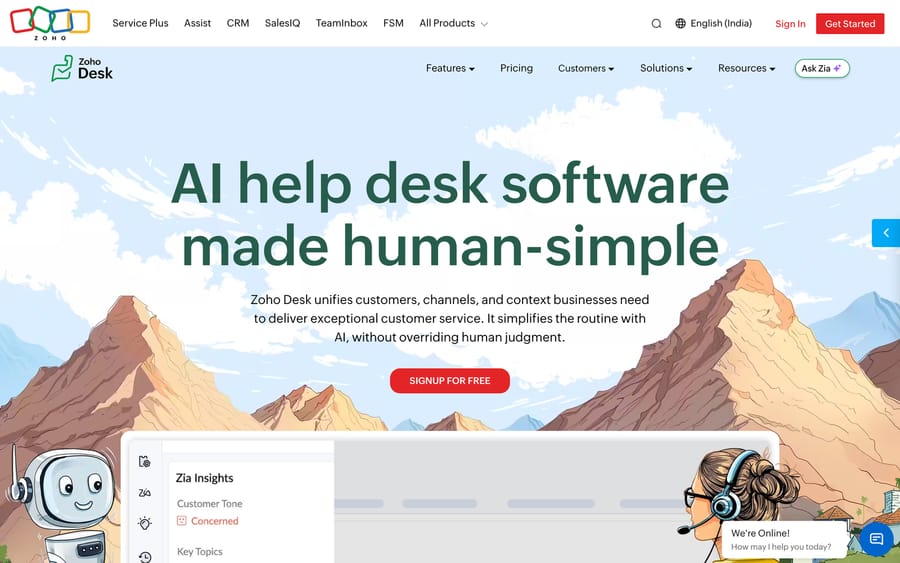
A feature-rich omnichannel help desk with strong automation in Blueprint, the Zia assistant and tight Zoho integration. The Free Edition is free forever for three users. We can't restate its paid dollar prices with confidence this round, because the page served us rupees; the figures in circulation, roughly $7 to $40 an agent a month, are from our June 2026 research and should be treated as indicative. It suits teams already running Zoho CRM or Zoho One.
5. Gorgias, the ecommerce specialist
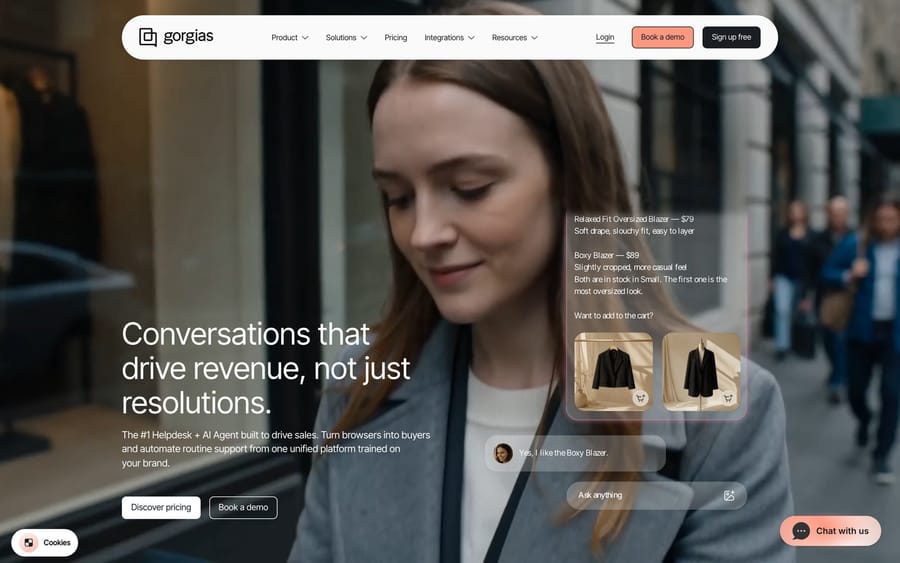
The Shopify-era help desk, purpose-built for retail: order, refund and subscription data in the ticket, and an AI Agent that resolves WISMO and returns natively. It bills on ticket volume rather than seats: Starter $40 a month for 50 tickets, Basic $90 or $77 annual for 300, Pro $550 or $471 for 2,000, Advanced $1,430 or $1,227 for 5,000, with $1.50 per automated interaction past the included allowance. It suits DTC brands whose support is order-related and is a poor fit outside ecommerce.
6. Intercom with Fin, the AI-first, chat-led platform
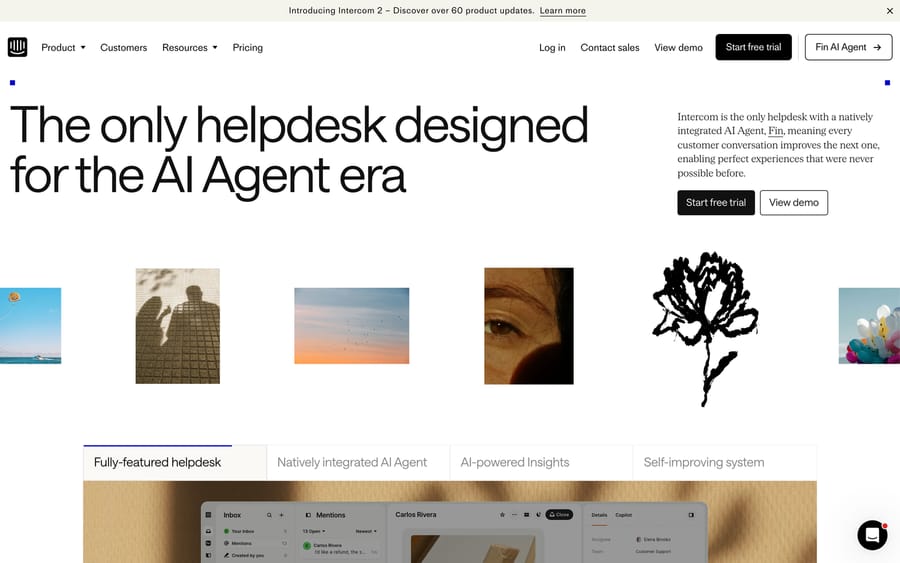
A messenger-first platform whose Fin agent is the most-cited per-outcome AI product in support. Advanced and Expert seats are $85 and $132 a month on annual billing, or $99 and $139 monthly; the entry Essential plan is $29 a seat billed annually (Intercom has also shown $19 in a pricing test). Fin is $0.99 per outcome, and its 50-outcome monthly minimum applies only when Fin runs on a help desk other than Intercom; Salesforce cites a 76% average resolution rate. The company renamed itself Fin on May 12, 2026, and Salesforce completed its acquisition on September 10, 2026. It suits SaaS teams whose support lives in in-app chat. The usage-based half of the bill is hard to forecast, which is the opposite of Help Scout's appeal.
7. Hiver, the Gmail-native option
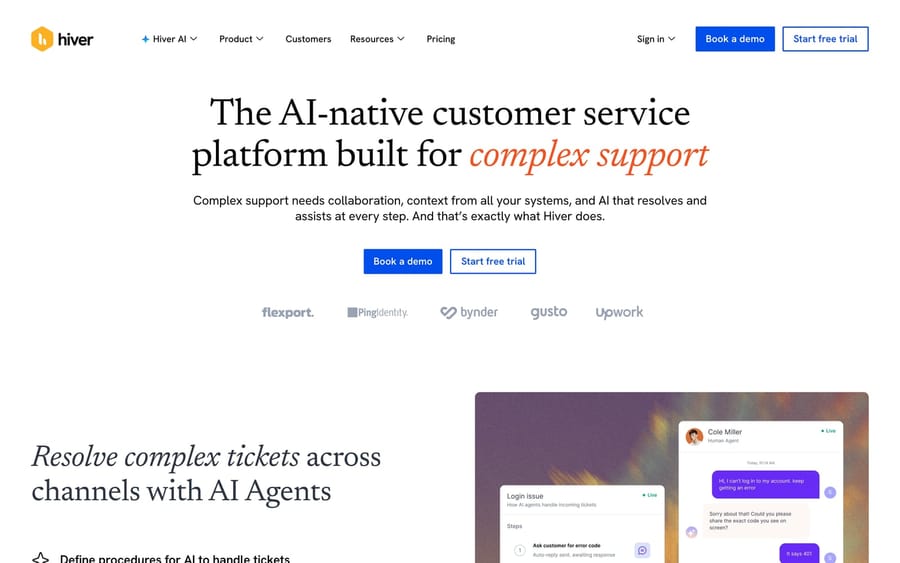
A help desk that lives inside Gmail, turning Google Workspace into a shared support inbox with assignments, SLAs, analytics and AI. Growth is $25 a user a month on annual billing and $35 monthly, Pro $55 or $65, Elite $85 or $95. Correction from the last version of this guide: there's no free plan any more, only a 7-day trial. It suits small Google Workspace teams who want structure without a new app, and its ceiling is lower than Help Scout's on knowledge base and standalone workflows.
8. Crisp, the chat-first, flat-priced option
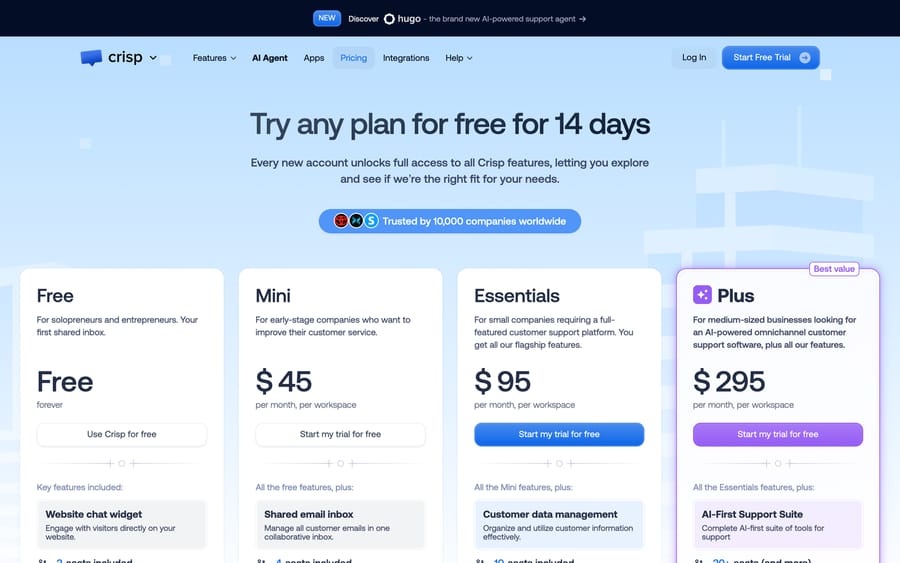
An all-in-one messaging tool built around live chat and a shared inbox, with a chatbot builder, knowledge base and CRM, sold flat per workspace. Free forever with 2 seats and, in its own words on the plan card, "No AI credits included," then Mini $45 with 4 agents, Essentials $95 with 10 and Plus $295 with 20 or more. The flat model is the reason it beats per-seat pricing for a growing team. It suits small teams whose primary channel is chat.
9. Tidio, the SMB live-chat and AI pick
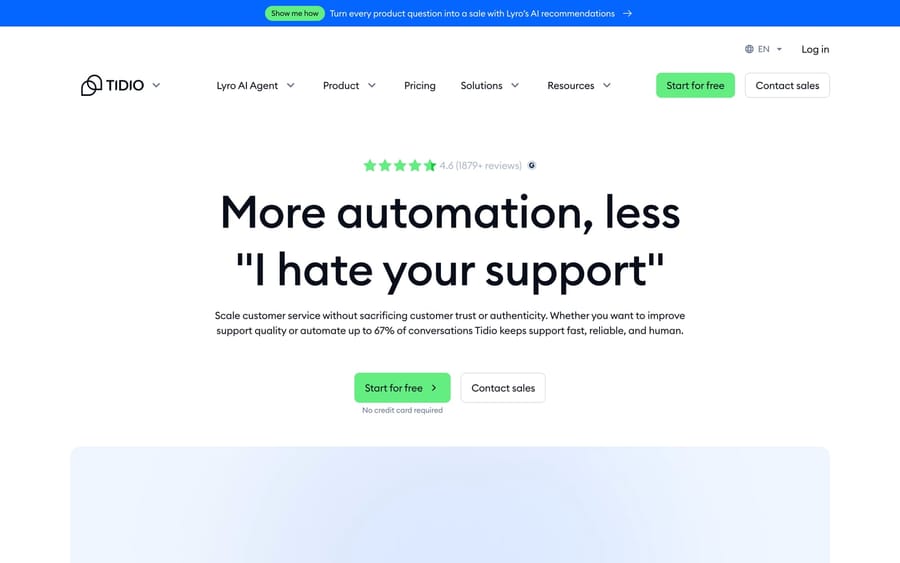
A live-chat and chatbot platform popular with small stores, with the Lyro agent and a Shopify integration. Free is $0 with 50 billable conversations a month across 10 seats, then Starter $24.17, Growth from $49.17 and Plus from $300 a month plus usage. Read the AI allowance carefully: Tidio's own table says your first 50 Lyro conversations are free for the lifetime of the account. It suits SMB ecommerce teams whose queue is mostly pre-sales and order chat, and it's a chat tool first.
Where does an AI agent layer fit if you leave Help Scout?
The disclosure again: Macha does not integrate with Help Scout. If you're staying on Help Scout, its own AI Answers at $0.75 a resolution or one of the AI-first tools above is your route, and this section doesn't apply to you.
Macha is an AI agent layer that runs on top of Zendesk, Freshdesk, Gorgias, Front, HubSpot or Intercom, plus the tools on our integrations page. It becomes relevant if your shortlist already points at one of those desks.
If it does, the billing unit is the thing to compare. Macha is one plan priced on monthly ticket volume, from $299 a month for 750 tickets, about $0.40 a ticket at every tier, with one charge per thread however many replies it takes. Set that against $0.75 or $0.99 per resolution and the arithmetic changes with your resolution rate. Setup and monitoring by our team are included on every plan.
It suits teams moving to one of those desks whose ticket mix is mostly repetitive questions a good help center could answer. It's the wrong choice for a Help Scout-only stack, and it's one more thing to configure. There's $50 of free usage to try it, no credit card, and the pricing page has the full table. You can see the layer working on Zendesk.
What do real users say about Help Scout?
Ratings give you the average; reviews give you the why. Praise centers on ease of use and a warm experience, and the criticism clusters on reporting depth and occasional product friction. Three attributed Capterra reviews, with the dates they were posted:
"Help Scout has a clean, intuitive interface that doesn't overwhelm users with unnecessary complexity, new team members can get comfortable with it quickly without much hand-holding." (Krystal M., People Operations, IT and Services, Capterra, April 2026)
"There are a few minor issues... like providing a bigger picture of all the chat supports of the last 3 months or providing a bird's-eye view like reports and dashboards." (Mansi M., Software Engineer, Computer Software, Capterra, December 2022)
"I don't love the recent updates and we often had technical issues of our webhook disabling." (Meghann O., Customer Success Manager, Computer Software, Capterra, December 2024)
Read together, the themes line up with why teams shop around. The simplicity that makes Help Scout good for small teams is the same simplicity that caps it for larger, process-heavy ones.
How do you choose the right Help Scout alternative?
- Name your real reason for leaving. Reporting depth points to Zendesk, Zoho Desk or Freshdesk. Routing points to Freshdesk or Zoho Desk. Collaboration points to Front. Ecommerce points to Gorgias. Chat and AI point to Intercom, Tidio or Crisp. Gmail points to Hiver. Price points to FreeScout or Chatwoot.
- If price is the reason, price the ops. FreeScout and self-hosted Chatwoot are free to license and cost you a server plus someone's attention. Five Help Scout Standard seats are $125 a month on annual billing, which is roughly what a small managed VPS and a few hours of maintenance cost. Do that comparison honestly before you migrate.
- Check the cap that bites first. On Help Scout's free plan it's 100 contacts a month, not the 5 users. On Chatwoot's it's 500 conversations. On Tidio's it's 50. The headline seat count is rarely the limit you hit.
- Model the total cost including AI. Help Scout taught this lesson with per-resolution AI Answers on top of per-user seats. Add each tool's AI charge, per seat, per resolution, per outcome or per conversation, then compare at your real volume.
- Weigh migration cost honestly. Moving help desks means data migration, retraining and rebuilt workflows. Worth it for a structural problem, overkill for one missing feature.
- Pilot on a real slice of your queue and measure resolution rate, CSAT and time to first response against your Help Scout baseline.
Frequently asked questions
Is there a free Help Scout alternative? FreeScout is the closest: an open-source, self-hosted help desk built as a Help Scout work-alike, with unlimited agents, tickets and mailboxes in the free core and paid modules on top. Chatwoot is the other open-source option and adds live chat and a help center. Zoho Desk's Free Edition gives three users at $0 on a hosted product.
Does Help Scout still have a free plan? Yes. It covers 5 users, 1 inbox, 1 Docs site, 10 articles, 10 saved replies, 10 tags and 100 contacts a month. Live chat isn't on it; that's a Standard-plan feature.
How much does Help Scout cost in 2026? Standard is $25 a user a month on annual billing and $30 monthly, Plus is $45 or $54, and Pro is $75 or $90 with a 10-user minimum. Extra inboxes are $10 a month, extra Docs sites $20, and AI Answers is $0.75 per resolution with three months free on a new account.
What is FreeScout, and is it really free? FreeScout is an open-source PHP and Laravel help desk and shared mailbox. The core is free and self-hosted, with no agent limit, and optional paid modules add features. The real cost is hosting and whoever applies the upgrades.
What is the cheapest alternative to Help Scout? Self-hosting FreeScout or Chatwoot, if you have somewhere to run them. Among hosted products, Zoho Desk's free three-user edition costs nothing, and Chatwoot Startups, Freshdesk Growth and Zendesk Support Team each start at $19 an agent. Crisp's flat $45 a month for 4 seats beats all of them once you have three or more people.
Did Help Scout raise its prices? Users say so, and the r/SaaS thread on it is linked above. What we can verify today is the current list: $25, $45 and $75 a user a month on annual billing, $30, $54 and $90 monthly, with AI Answers billed separately per resolution.
What is the closest tool to Help Scout? Front is the closest in spirit, since both feel like an upgraded shared inbox instead of a ticketing system, though Front adds channels and costs more at the top. FreeScout is the closest in shape, because it was built to look like Help Scout. Hiver is close if your team lives in Gmail.
Can I add an AI agent to Help Scout instead of switching? Help Scout's own AI Answers is $0.75 per resolution and turns on without leaving. Third-party layers vary by help desk; ours runs on Zendesk, Freshdesk, Gorgias, Front, HubSpot or Intercom, and not on Help Scout, so it's only relevant if you're already moving to one of those.
Which Help Scout alternative should you pick?
Pick by your reason for looking. If it's reporting, Zendesk, Zoho Desk and Freshdesk all do more. If it's collaboration, Front is closest in feel. If it's ecommerce, Gorgias. If it's Gmail, Hiver, though its free plan is gone. And if it's the price, the honest answer is FreeScout or self-hosted Chatwoot, where the license costs nothing and the server costs something. Before any of that, check whether Help Scout's own free plan covers you: 5 users and 1 inbox is more than a lot of teams need, and 100 contacts a month is the line you'll cross first.
Sources: Help Scout pricing, FreeScout, Chatwoot pricing, Zoho Desk pricing, Freshdesk pricing, Zendesk pricing, Front pricing, Hiver pricing, Gorgias pricing, Crisp pricing, Tidio pricing, all read 2026-09-20; Intercom pricing, read 2026-09-24; Zendesk on outcome-based pricing; Salesforce completes acquisition of Fin; r/SaaS, "HelpScout is significantly raising its prices out of nowhere"; r/Freescout, "Helpscout > Free scout migration".
Resolve tickets automatically with AI agents
Macha's AI agents work on top of the help desk you already use — no code.