Shopify
 Stripe
 Slack
Slack Notion
 Google Workspace
 Confluence

Best Gladly Alternatives in 2026: 8 Platforms Compared on Price and Fit


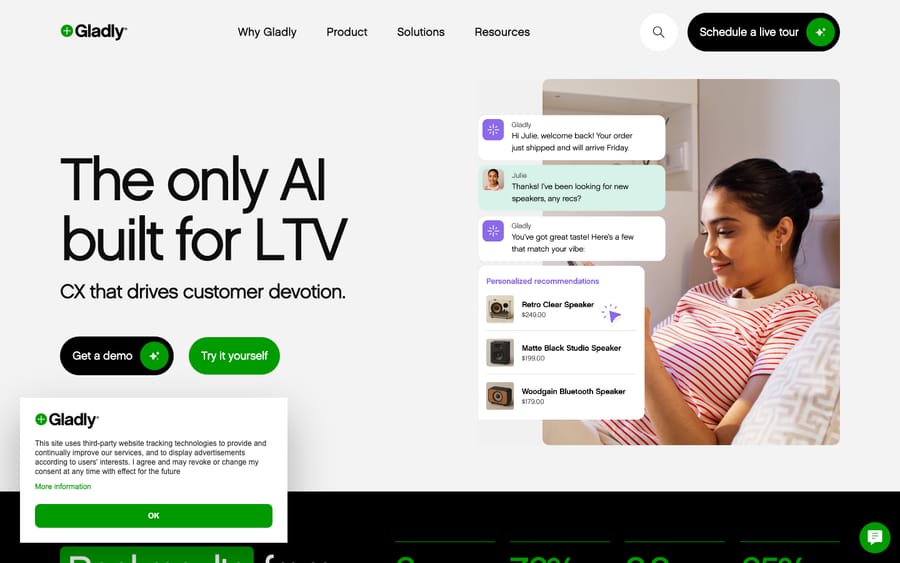
Gladly organizes support around one lifelong conversation per customer instead of tickets, and it prices that model for enterprise consumer brands. That price, which Gladly doesn't publish, is the main reason teams shortlist the eight alternatives below.
Key takeaways
- Kustomer is the closest Gladly alternative because both organize support around a unified customer timeline, while Gorgias and Zendesk win for Shopify orders and omnichannel scale.
- Gladly doesn't publish prices, and third-party trackers report Hero at about $180 per user per month with a 10-seat minimum and Superhero at about $210.
- Gorgias is the cheapest ecommerce-focused Gladly alternative, billed on ticket volume from $10 a month for 50 tickets, with AI Agent interactions at $0.90 each on annual plans.
- Intercom seats cost $29 to $132 billed annually and Fin adds $0.99 per outcome, with the 50-outcome minimum applying only when Fin runs off Intercom.
- Freshdesk Omni costs $29 to $119 per agent a month billed annually, and Help Scout is free for 5 users before paid plans start at $25.

The best Gladly alternative for most teams is Kustomer if you want the same customer-timeline model, Gorgias if your support is Shopify orders (from $10 a month for 50 tickets), and Zendesk if you need to scale omnichannel ($19 to $115 per agent a month). Freshdesk, Re:amaze, Front, Help Scout and Intercom round out the shortlist of eight below, each covered the same way: what it is, who it wins, its pricing, its G2 rating with a user quote, and how it differs from Gladly. Prices were re-checked on vendor pages on 24 September 2026. (New to the category? Start with what Gladly is.)
Which Gladly alternatives are worth shortlisting?
| Tool | G2 rating (approx.) | Pricing model | Best for | vs Gladly |
|---|---|---|---|---|
| Gorgias | 4.6/5 | Ticket-volume, from $10/mo | Shopify / DTC ecommerce | Order-native; far cheaper to start |
| Zendesk | 4.3/5 (~6,800) | $19–$115/agent/mo + per-resolution AI | Scaling omnichannel teams | Bigger ecosystem; ticket-, not people-, centric |
| Kustomer | 4.4/5 | Quote-only; reported $89–$139/seat/mo (8-seat min) | B2C brands wanting a CRM timeline | Closest like-for-like; usage AI add-ons |
| Intercom (Fin) | 4.5/5 (~3,200) | $29–$132/seat + $0.99/outcome for Fin | Digital-first, chat-led CX | Stronger AI deflection; messenger-first |
| Freshdesk | 4.4/5 (~3,700) | $29–$79/agent/mo (Omni) | Budget omnichannel teams | Much cheaper; classic ticketing |
| Re:amaze | 4.6/5 | $29–$69/user/mo | Small/mid ecommerce on a budget | Tiny, affordable, Shopify-friendly |
| Front | 4.7/5 (~2,429) | $25–$105/seat/mo | Collaborative, high-touch ops | Shared-inbox feel; outcome-priced AI |
| Help Scout | ~4.4/5 | Free for 5 users, then from $25/user/mo | Lean teams wanting simplicity | Simpler and cheaper; less voice |
Update (September 2026): Salesforce completed its acquisition of Fin — the company that had already renamed itself from Intercom on May 12, 2026, before any deal was signed — on September 10, 2026, in a deal worth ~$3.6 billion, and plans to fold it into Salesforce's Agentforce. Worth weighing in any long-term Intercom/Fin decision.
Prices re-checked on vendor pages on 24 September 2026; G2 ratings are approximate and date from June 2026. Verify before buying.
Why do teams look for a Gladly alternative?
Gladly isn't a weak product — it's a deliberately premium one. The reasons teams shop around are mostly about fit and cost, not quality.
- Enterprise pricing with high seat minimums. Gladly doesn't publish prices; its pricing page sends you to sales. Third-party trackers (Hiver, eesel) report the Hero plan at about $180/user/month (10-seat minimum) and Superhero at about $210/user/month (45-seat minimum), on annual contracts. At the 10-seat minimum that's roughly $21,600 a year. For a growing brand with a 10-person team, that's a serious line item — and it puts Gladly out of reach for most SMBs.
- AI and voice cost extra, per use. The same trackers report the Sidekick AI assistant at around $0.60 per conversation and Voice AI at roughly $0.062 extra per minute on top of standard telephony. Usage-based AI on top of premium seats can make total cost hard to predict.
- It's purpose-built for B2C. The people-centric, lifelong-timeline model is a gift for consumer brands and a slightly awkward fit for B2B, IT, or internal support, where ticket-, asset-, and SLA-centric workflows matter more.
- Reporting has a learning curve. A recurring, fair note in reviews is that Gladly's reporting and terminology take time to understand — fine for a dedicated CX ops team, friction for a lean one.
None of this makes Gladly the wrong call — for a funded consumer brand that lives on voice plus messaging and cares deeply about LTV, it's often exactly right. It makes it a specific call. Keep your real reason for looking in mind as you read; it determines which alternative below actually fixes your problem.
How did we compare them?
We focused on platforms a Gladly team could realistically move to: consumer- and ecommerce-oriented help desks, plus the broader CX suites that win for particular segments. For each one we pulled live pricing from the vendor's own pages (or cited third-party trackers where pricing is quote-only), the current G2 and Capterra star ratings with approximate review counts as a real-user signal, and we read through verified G2 and Capterra reviews for recurring praise and complaints. The verbatim quotes in the "what users say" sections come from those public review pages. Prices were re-checked on each vendor's own page on 24 September 2026. The G2 and Capterra ratings date from June 2026 and are approximate, so confirm on each vendor's site before you buy.
What are the 8 best Gladly alternatives?
1. Gorgias — the ecommerce specialist
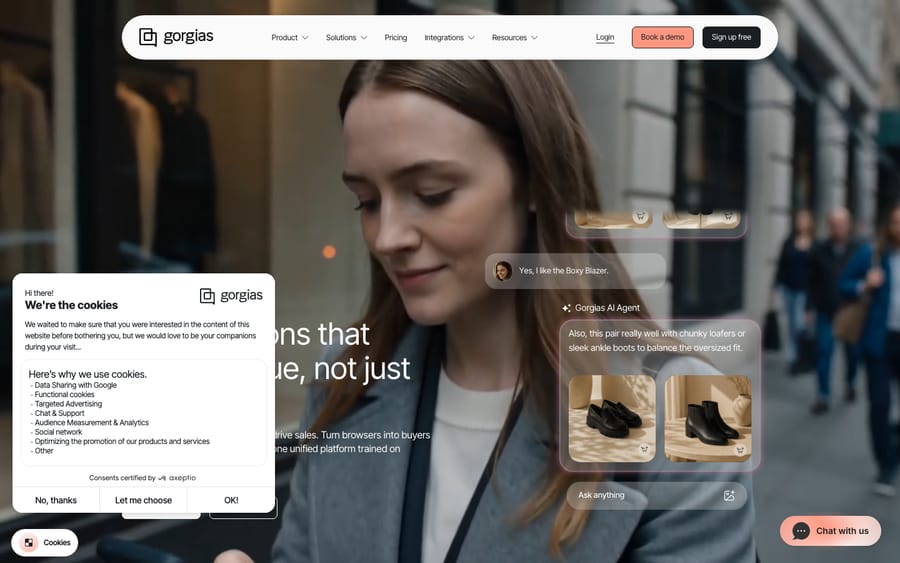
What it is: The dominant Shopify-era helpdesk, purpose-built for ecommerce. It pulls order, refund, and subscription data into every conversation and its AI Agent resolves WISMO, returns, and product questions natively. Who it wins: Shopify, BigCommerce, and DTC brands whose support is mostly order-related and who want revenue attribution baked into support. Pricing model: Billed on monthly ticket volume, not seats — Starter $10/mo (50 tickets), Basic $60 (300), Pro $360 (2,000), Advanced $900 (5,000), Enterprise custom; AI Agent interactions cost $0.90 each on annual plans or $1.00 monthly, and each one also counts as a helpdesk ticket. All paid tiers above Starter include unlimited agents. Rating: G2 4.6/5 and Capterra 4.6/5 — one of the highest-rated ecommerce help desks.
"The ecosystem of integrations has been excellent — the native ecommerce sidebar gives quick access to customer orders and refunds." — Verified Sr. Manager, Digital Marketing, Capterra
How it differs from Gladly: Both target consumer brands, but Gorgias is ticket- and order-native rather than people-timeline-native, and its volume-based pricing starts dramatically lower. It's the obvious move if your support is order-driven and your budget can't absorb Gladly's seat minimums. For the full landscape, see our best help desk for ecommerce guide.
2. Zendesk — the scalable omnichannel standard
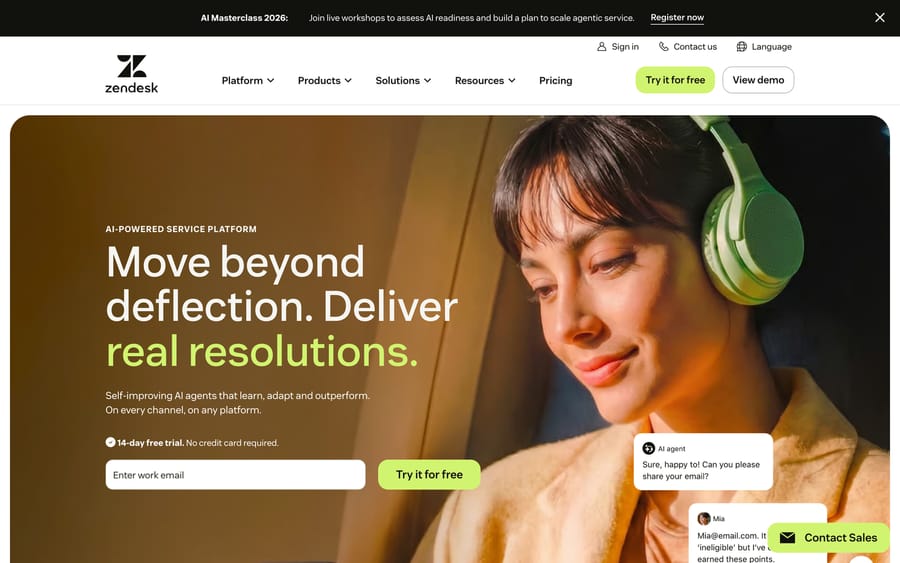
What it is: The category's most extensible support platform — omnichannel ticketing, a huge marketplace, deep reporting, and native AI agents now strengthened by Forethought, whose acquisition Zendesk completed on 26 March 2026 (folded into its "Resolution Platform"). Who it wins: Scaling teams that want configurability, analytics horsepower, and a vast app ecosystem across both B2C and B2B. Pricing model: Plans run $19 (Support Team), $55 (Suite Team) and $115/agent/month (Suite Professional), billed annually. AI agents are included and billed per automated resolution at $1.50 committed or $2.00 pay-as-you-go, and Copilot is $50/agent/month on Suite Professional and above (zendesk.com/pricing). Rating: G2 4.3/5 across ~6,800 reviews — one of the largest review bases in the category.
"I appreciate how Zendesk Support Suite helps us organize our tickets effectively. It allows us to automatically assign tasks based on tags that we've created, equipped with specific names and triggers, thus enhancing our efficiency." — Verified User in Information Technology, G2
How it differs from Gladly: Zendesk is ticket-centric where Gladly is people-centric, and its ecosystem and reporting are broader. It's less opinionated about the consumer-brand experience, but far more flexible for mixed or scaling support orgs — and easier to staff for, since most agents already know it.
3. Kustomer — the closest like-for-like
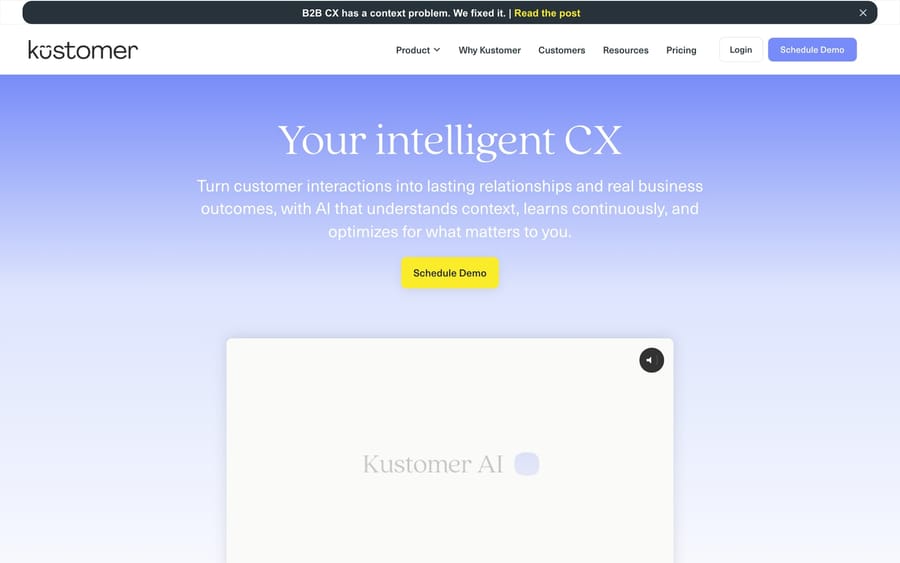
What it is: A CRM-first customer service platform that, like Gladly, organizes support around a unified customer timeline rather than tickets, with AI built on a multi-agent architecture. Who it wins: B2C and high-volume brands that specifically want Gladly's customer-centric model but with a different commercial fit and a heavier CRM/data emphasis. Pricing model: Kustomer no longer posts prices; its pricing page gives an estimate after a two-minute assessment. A Gorgias breakdown reports Enterprise $89/seat/month and Ultimate $139/seat/month, annual, with an 8-seat minimum, a conversation-based option from $0.35–$0.50 per conversation, and customer-facing AI at about $0.60 per engaged conversation. Rating: G2 4.4/5.
"The platform allows for tailoring workflows based on specific business needs and customer segments, enabling personalized support." — Verified Reviewer, Capterra
How it differs from Gladly: This is the most direct structural analog — both reject tickets for timelines. Kustomer tends to lean harder into data/CRM and offers conversation-based pricing, but it carries its own seat minimums, AI usage fees, and a real implementation cost. Evaluate the two head-to-head if the people-centric model is non-negotiable.
4. Intercom (with Fin AI) — the AI-first, chat-led platform
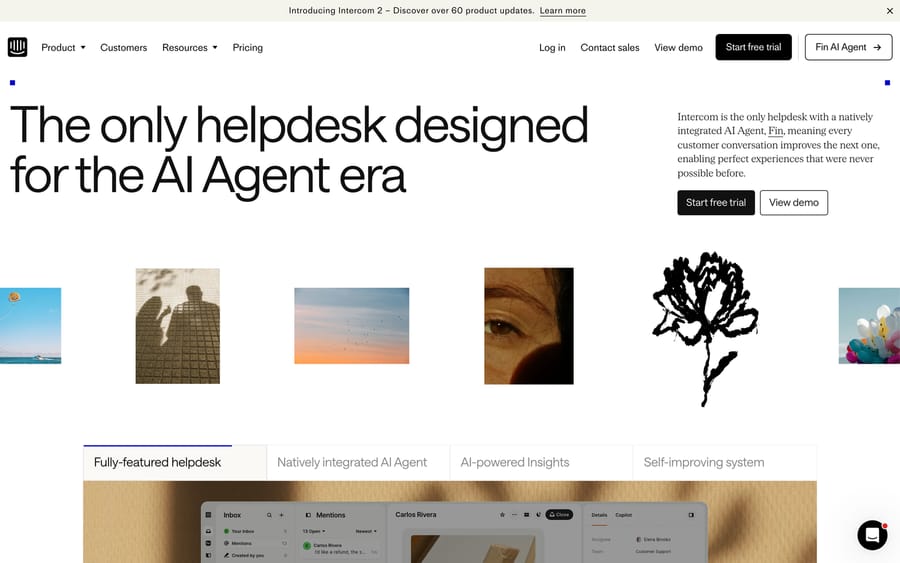
What it is: A messenger-first support and engagement platform whose Fin AI agent is one of the most-cited per-resolution products on the market, strong at in-app chat and proactive messaging. Who it wins: Digital-first and subscription consumer brands whose support skews to chat and email rather than phone, and who want best-in-class AI deflection. Pricing model: Seats run $29 (Essential), $85 (Advanced) and $132 (Expert) a seat billed annually (Intercom has also shown $19 for Essential in a pricing test), and Fin costs $0.99 per outcome on top. The 50-outcome monthly minimum applies only when Fin runs on a help desk other than Intercom. Your real bill scales with volume. Rating: G2 4.5/5 across ~3,200 reviews.
"Fin addresses some very real, everyday support challenges. The biggest one is dealing with a high volume of repetitive customer questions. Rather than having agents answer the same things over and over, Fin can handle those instantly. That translates into fewer tickets for the team and a lot less manual effort." — Verified Reviewer (Customer Support), G2
How it differs from Gladly: A stronger messenger and a more aggressive AI-resolution story, but a modular, usage-heavy pricing model that's notoriously hard to forecast — and a chat-first center of gravity versus Gladly's voice-plus-everything balance. Best when AI deflection and in-app chat are your priority over phone.
5. Freshdesk — the budget omnichannel pick
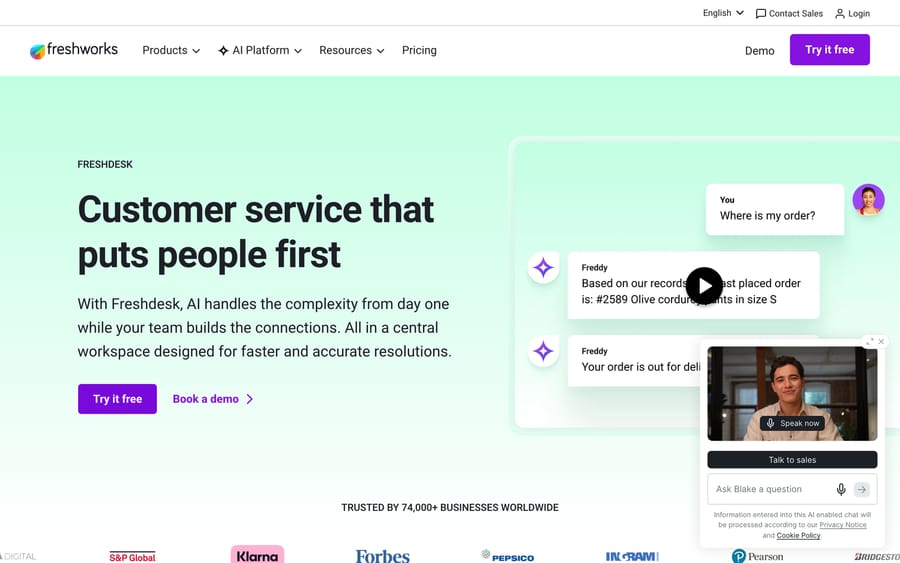
What it is: Freshworks' affordable, quick-to-deploy helpdesk with omnichannel ticketing (Freshdesk Omni), strong automation, and the Freddy AI add-ons. Who it wins: Cost-conscious teams that want broad channel coverage and solid ticketing without an enterprise commitment. Pricing model: Omni Growth $29/agent/month, Pro $79/agent/month and Enterprise $119/agent/month, billed annually. There's no free plan on the pricing page, though a Free program covers up to 2 agents for 6 months. Freddy AI Copilot is a $29/agent/month add-on, and the Freddy AI Agent comes with 500 sessions once per account, then $49 per 100 sessions. Rating: G2 4.4/5 across ~3,700 reviews.
"What I like most about Freshdesk is that it keeps all customer conversations in one place. Everything becomes a ticket, so every issue has a clear trail from messages to resolution. This has reduced back and forth, improved response times, and helped us stay consistent even when the workload increases." — Verified User (Customer Support), G2
How it differs from Gladly: Dramatically cheaper and far easier to adopt for a small team, but it's a classic ticketing tool — no lifelong customer timeline, and the consumer-brand polish Gladly is famous for isn't the point. A pragmatic swap if your bottleneck was Gladly's cost, not its model.
6. Re:amaze — the small-ecommerce value option
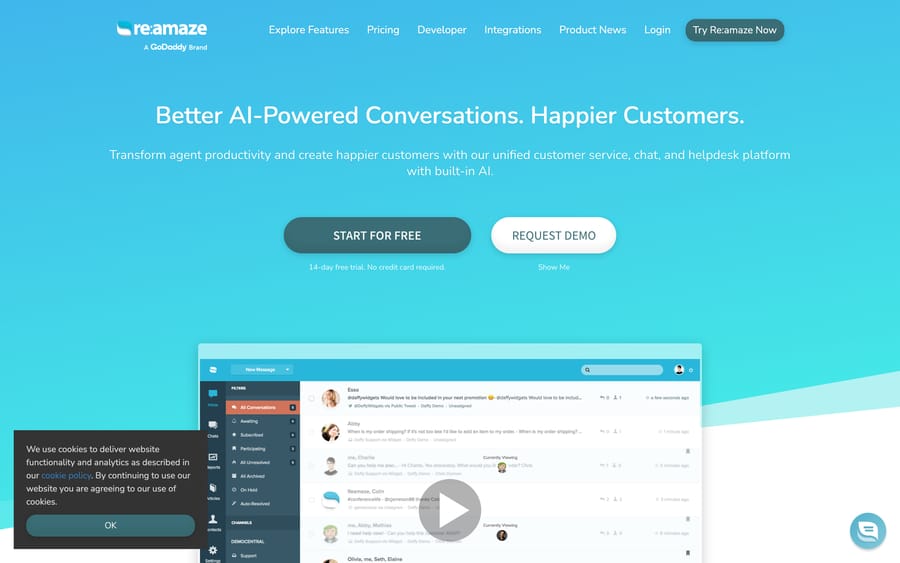
What it is: A lightweight, ecommerce-friendly helpdesk combining shared inbox, live chat, chatbots, and FAQ tools, with strong Shopify integration at a low price. Who it wins: Small and mid-sized online stores that want order-aware support and multichannel coverage without enterprise pricing or a heavy rollout. Pricing model: Basic $29, Pro $49, Plus $69 per user/month, plus a Starter plan at $59/month flat for unlimited team members (capped at 500 conversations/month). All plans include a 14-day trial. Rating: G2 4.6/5 (~139 reviews) and Capterra 4.8/5 (smaller review base).
"Re:amaze allows me to do a lot with minimal time and money investment. I can create form letters with merge fields, auto-responders, and monitor our social media. It's a real Swiss Army Knife of customer engagement." — Verified Reviewer, Capterra
How it differs from Gladly: A fraction of the cost and complexity, aimed squarely at growing stores rather than enterprise consumer brands. You trade Gladly's depth, voice sophistication, and unified-customer polish for speed, simplicity, and price. Excellent for a brand that finds Gladly aspirational but not yet affordable.
7. Front — the collaborative shared inbox
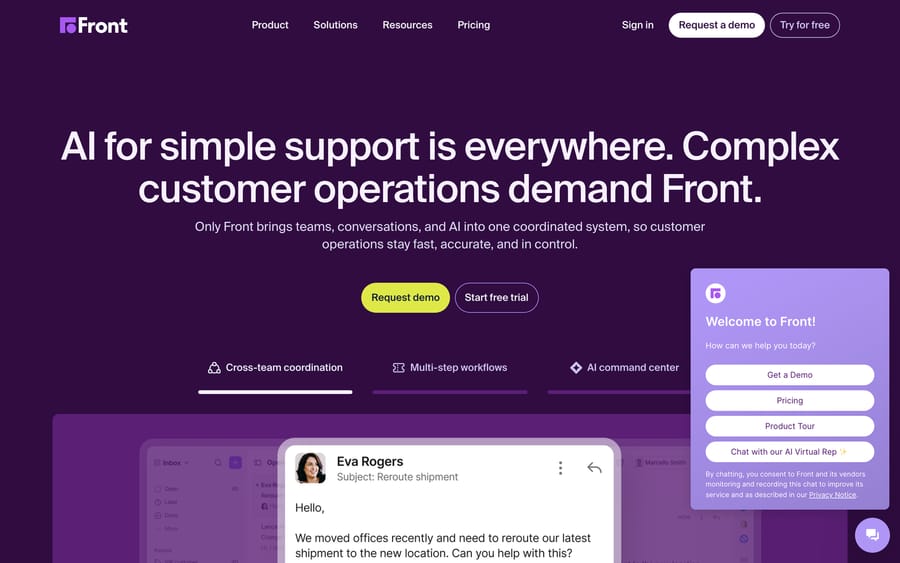
What it is: A shared-inbox platform that blends email, chat, SMS, and social into one collaborative workspace with internal comments, assignments, and shared drafts, plus AI features layered on top. Who it wins: High-touch, relationship-led teams (retail concierge, logistics, B2B services) where support is a team sport and conversations need real collaboration. Pricing model: Starter $25, Professional $65, Enterprise $105 per seat/month, billed annually; Copilot and Smart QA are $20/seat/month add-ons on Starter and Professional (included on Enterprise), and Autopilot uses tiered outcome pricing starting at $0.05 a conversation, charged once for the highest outcome reached. Rating: G2 4.7/5 across ~2,429 reviews (long rated highly for ease of use and collaboration).
"The shared inbox functionality is a game-changer, making collaboration seamless and ensuring no messages slip through the cracks. The ability to assign emails, leave internal comments, and automate workflows has significantly boosted our efficiency." — Verified Reviewer, G2
How it differs from Gladly: Front feels like a souped-up shared inbox rather than a customer-history platform — collaborative and email-strong, lighter on native voice and on the lifelong-timeline concept. A great fit for personal, high-touch CX teams that value internal collaboration over a single unified customer record.
8. Help Scout — the simple, human-first inbox
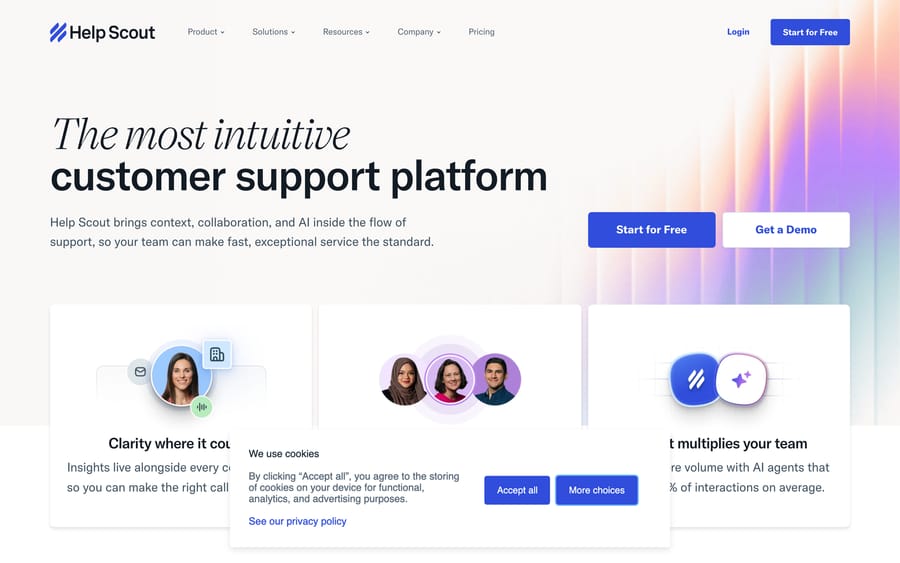
What it is: A clean, conversation-style helpdesk built around a shared inbox, knowledge base (Docs), and live chat (Beacon), with AI layered in. It deliberately hides the "ticket" machinery to feel like email. Who it wins: Lean B2C and services teams that want a warm customer experience and fast onboarding without enterprise overhead. Pricing model: Billed per user, with unlimited contacts — a Free plan for 5 users, then Standard $25, Plus $45, and Pro $75 per user/month (annual). AI Answers is an add-on at $0.75 per AI-resolved conversation. (Help Scout's older contacts-based plans are legacy and only available to existing customers.) Rating: G2 ~4.4/5 — consistently praised for ease of use.
"Help Scout has a clean, intuitive interface that doesn't overwhelm users — new team members can get comfortable with it quickly without much hand-holding." — Verified Reviewer, Capterra, April 2026
How it differs from Gladly: Far simpler and cheaper, with low per-user pricing that's friendly to small teams. The trade-off is depth: no lifelong customer timeline, lighter voice, and a lower ceiling for complex, high-volume consumer operations. The right call when simplicity beats sophistication.
Do you need to replace Gladly to get better AI?
Here's the honest part, and a disclosure: we make an AI product, so we'll be upfront about where it fits — and where it doesn't.
If you read the "why teams leave" list and your real frustration was AI capability or deflection cost rather than Gladly itself, switching platforms is a lot of pain to solve the wrong problem. But our product, Macha, is not a Gladly alternative, and it does not integrate with Gladly. Macha is an AI agent layer that runs on top of Zendesk, Freshdesk, Gorgias, Front, HubSpot or Intercom. It reads the customer's question, pulls from your connected order and help-center data, resolves routine tickets inside those workflows, and hands off to a human with full context when it isn't confident.
So Macha is relevant here in one case: if your shortlist lands on a help desk Macha runs on, such as Zendesk, Freshdesk, Gorgias, Front or Intercom from the list above, you could add Macha's AI layer on top of the new platform instead of paying a per-resolution AI bill. If you stay on Gladly, use Gladly's native AI. Its pricing is per ticket (one charge per thread, however many replies it takes, from $299/mo for 750 tickets), not per resolution, with setup and monitoring by the Macha team included. Per-resolution pricing means a vendor earns more as more tickets pass through its bot; per-ticket pricing is a number you can budget. See how the layer works on Zendesk, or $50 of free usage, no credit card required.
What do real users say about Gladly?
Ratings tell you the average; reviews tell you why. Gladly scores roughly 4.6–4.8/5 across G2, Capterra, and TrustRadius, with the praise centered on its people-first model and the criticism on cost and reporting. A few representative, attributed verified reviews from Capterra:
"The conversation-based structure — rather than a traditional ticketing model — has been a standout advantage. It provides a more natural, customer-centric workflow, enabling our team to follow interactions seamlessly across channels and maintain full context in a single thread." — Verified Reviewer, Capterra
"The Sidekick chatbot has been a huge asset. It helps customers with returns, order tracking, and other self-service needs, freeing up our agents to focus on higher-level conversations." — Verified Reviewer, Capterra
"Reporting can take some time to understand, and some of the terminology Gladly uses can be a tad confusing at first." — Verified Reviewer, Capterra
Read together, the themes are consistent with the reasons teams shop around: a beloved customer-centric model and strong self-service, offset by reporting that takes effort to learn and a price that only makes sense at a certain scale.
How do you choose the right Gladly alternative?
- Name your real reason for leaving. If it's cost or seat minimums, Gorgias, Re:amaze, Freshdesk, or Help Scout solve it fast. If it's B2B/mixed fit, Zendesk. If you love the people-centric model but not the commercials, Kustomer. If it's AI deflection, Intercom, or an AI layer on whichever help desk you move to.
- Match the tool to your channel mix. Voice-heavy consumer brand? Gladly's hard to fully replace, but Zendesk and Kustomer come closest. Order-driven ecommerce? Gorgias or Re:amaze. Chat-led digital? Intercom. Collaborative, high-touch? Front. Email-simple? Help Scout.
- Model the total cost, including AI. Gladly taught everyone this lesson with Sidekick and Voice AI. Add per-conversation or per-resolution AI fees, seat minimums, and channel costs, then compare like-for-like at your actual volume — the sticker price is rarely the real bill.
- Weigh migration cost honestly. Moving CX platforms means data migration, retraining, and rebuilt workflows. Worth it for a structural cost or fit problem; overkill for a single feature gap.
- Pilot on a real slice of your queue. Run your shortlist on live conversations and measure resolution rate, CSAT, and time-to-first-response against your Gladly baseline before you commit.
Frequently asked questions
What is the best Gladly alternative in 2026? There's no single winner — it depends on why you're leaving. Kustomer is the closest like-for-like (also people-/CRM-centric); Gorgias owns Shopify ecommerce; Zendesk is the most extensible omnichannel standard; Intercom leads on chat and AI deflection; Freshdesk and Re:amaze are the budget picks; Front wins collaborative high-touch teams; and Help Scout is best for lean teams wanting simplicity.
Why is Gladly so expensive? Gladly is priced as an enterprise consumer-CX platform. Gladly doesn't publish prices, but third-party trackers report Hero around $180/user/month (10-seat minimum) and Superhero around $210/user/month (45-seat minimum), roughly $21,600 a year at the smallest Hero contract, plus usage-based AI (Sidekick ~$0.60/conversation) and Voice AI (~$0.062/minute). That premium buys the people-centric model and strong voice — but it's why smaller teams look elsewhere.
What is the closest alternative to Gladly? Kustomer is the most direct structural analog — like Gladly, it organizes support around a unified customer timeline rather than tickets. It carries a reported 8-seat minimum and usage-based AI fees, so model the total cost, but it's the natural first comparison if the people-centric model is what you value.
What's the cheapest Gladly alternative? Gorgias (from $10/month, ticket-volume), Re:amaze (from $29/user/month), Freshdesk (Omni from $29/agent/month), and Help Scout (free for 5 users, then from $25/user/month) are the most budget-friendly. Remember to add AI costs when comparing — the base price is rarely the final number.
Do I have to leave Gladly to get better AI? If you're staying on Gladly, use its native Sidekick AI. Macha, our AI agent layer, runs on Zendesk, Freshdesk, Gorgias, Front, HubSpot or Intercom, not Gladly, so it's relevant only if your shortlist includes migrating to one of those. In that case you could add Macha on top of the new platform instead of paying a separate per-conversation AI bill, billed per ticket rather than per resolution.
Which Gladly alternative should you pick?
The best Gladly alternative is the one that fixes your specific reason for looking. Kustomer is the closest people-centric match; Gorgias and Re:amaze the ecommerce-value picks; Zendesk the extensible standard; Intercom the AI- and chat-led platform; Freshdesk the budget omnichannel choice; Front the collaborative inbox; and Help Scout the simplicity pick. Pin down your channel mix, model the total cost including AI, and pilot on real conversations before you migrate. Gladly is a genuinely excellent product for funded consumer brands — make sure you're switching to solve a real constraint, not chasing a feature.
Pricing re-checked on vendor pages on 24 September 2026; ratings from June 2026. CX and AI pricing in this category changes fast, so confirm current terms on each vendor's site before buying.