Intercom
 Shopify
 Stripe
 Slack
Slack Notion
 Google Workspace
 Confluence

What Is the Best Help Desk for Ecommerce in 2026?


Most ecommerce support is order status, returns and address changes, so the right help desk pulls Shopify order and tracking data into the ticket and lets AI resolve the repetitive ones. We compared ten help desks on ecommerce fit, pricing checked on vendor pages in September 2026, and user ratings.
Key takeaways
- Gorgias is the most Shopify-native ecommerce help desk, billed by ticket volume from $10 a month for 50 tickets up to $900 a month for 5,000.
- The Gorgias AI Agent is charged per automated interaction, at $1.00 on Starter, $0.90 on Basic and Pro, and $0.85 on Advanced.
- Richpanel has dropped its three tiers for a single $99 helpdesk seat and AI agents at $0.20 per AI-handled conversation, with the self-service portal included.
- eDesk connects natively to Amazon, eBay, Walmart, Etsy and TikTok Shop, priced at $39, $89 or $119 a user a month on annual billing.
- Gladly and Kustomer no longer publish prices, so both are quoted through a sales call rather than a per-seat price list.

The best help desk for most Shopify and DTC brands in 2026 is Gorgias, which bills by ticket volume from $10 a month for 50 tickets and pulls order, tracking and refund data into every ticket. Re:amaze is the cheaper per-user alternative at $29 a user a month, eDesk wins for Amazon and marketplace sellers, and Zendesk or Freshdesk suit brands that need a general platform with Shopify added on. Below are ten tools worth shortlisting, from the Shopify-native specialist that defined the category to scalable platforms, marketplace tools, premium relationship suites and chat-first budget picks, with each one's ecommerce fit, pricing model, G2/Capterra rating and what users say. Prices were re-checked on each vendor's own pricing page on September 24, 2026; ratings are as recorded in June 2026.
The best ecommerce help desks at a glance
| Tool | G2 rating (June 2026) | Pricing model (Sept 2026) | Best for | Ecommerce fit |
|---|---|---|---|---|
| Gorgias | 4.6/5 (134, Capterra) | Ticket volume, $10 to $900/mo; AI Agent $0.85 to $1.00 per automated interaction | Shopify/DTC brands wanting deep native ecommerce | Best-in-class Shopify, order ops, revenue tracking |
| Zendesk | 4.3/5 (~6,707) | $19–$115/agent/mo; AI resolutions extra | Scaling brands needing depth + ecosystem | Strong via app + AI; not DTC-native out of the box |
| Freshdesk | 4.4/5 (~3,728) | $19 standalone / $29 Omni per agent (annual) | Budget omnichannel support | Good general-purpose; Shopify via integration |
| Re:amaze | 4.6/5 (~139) | $29/$49/$69 per user (+$59 flat Starter) | Shopify brands wanting Gorgias-like, cheaper | Native Shopify, order data in inbox |
| Richpanel | 4.7/5 (~93) | $99 per seat; AI $0.20 per conversation | DTC leaning on self-service deflection | Self-service portal and AI now included |
| eDesk | ~4.6/5 (~72) | $39/$89/$119 per user (annual) | Multichannel marketplace sellers | Amazon/eBay/Walmart-native, not just Shopify |
| Gladly | 4.7/5 (~1,096) | Custom, not published | Premium, voice-heavy retail brands | People-first, no tickets; enterprise-grade |
| Kustomer | 4.5/5 (~551) | Custom, not published | Mid-market/enterprise, relationship-led | Unified customer timeline, not ticket-per-order |
| Help Scout | ~4.4/5 (400+) | Free, then $25/$45/$75 per user | Small DTC wanting a simple, human inbox | Lighter order data; warm CX |
| Tidio | 4.7/5 (Capterra 4.7) | Free, then from $24.17/mo; Lyro AI metered | Small stores wanting chat-first + cheap AI | Shopify-friendly chat; lighter helpdesk depth |
Prices checked on vendor pages on September 24, 2026; ratings recorded in June 2026. Verify both before buying.
Ecommerce support is a different job from a generic IT or B2B SaaS help desk: most of the inbox is order status, returns and address changes, not open-ended questions. That changes what to look for.
What makes a help desk good for ecommerce?
The criteria that matter for an online store, as a checklist:
- Native order context. Can it pull Shopify (or BigCommerce/WooCommerce/Amazon) order, tracking and refund data into the ticket automatically, so agents don't tab-hop? This is the biggest differentiator between an ecommerce help desk and a repurposed generic one.
- Returns, refunds and edits in-app. The best tools let an agent (or the customer, via self-service) cancel, refund or edit an order without leaving the inbox.
- AI for WISMO and returns. "Where is my order" and return requests are the bulk of DTC volume. Modern ecommerce help desks deflect or auto-resolve these with AI that reads live order data, which is usually the first automation worth turning on.
- Revenue tracking. Does it tie support conversations (especially live chat) to sales, so you can see support as a revenue driver, not just a cost center?
- Channel mix for retail. Email, live chat, social DMs/comments (Instagram, Facebook, TikTok), SMS and WhatsApp. Shoppers expect all of them.
- A pricing model that survives Black Friday. Seasonal spikes can wreck a poorly matched plan. Per-seat, per-ticket and per-conversation models each behave very differently when November hits.
How did we compare these help desks?
We focused on tools a real ecommerce team would shortlist: the Shopify-native specialists built for DTC, the general-purpose platforms with strong ecommerce stories, the marketplace-first option, the premium relationship suites and chat-first picks for smaller stores. For each we pulled live pricing from the vendor's own page, most recently on September 24, 2026; two vendors (Gladly and Kustomer) no longer publish prices at all, and we say so rather than repeat old third-party estimates. Ratings are the G2/Capterra star rating and approximate review count we recorded in June 2026, and we read review sentiment for recurring praise and complaints. Attributed quotes are sourced from Capterra/G2 where a clean named review exists; otherwise we summarize aggregate sentiment and say so.
Which are the 10 best help desks for ecommerce?
1. Gorgias, the Shopify-native category leader
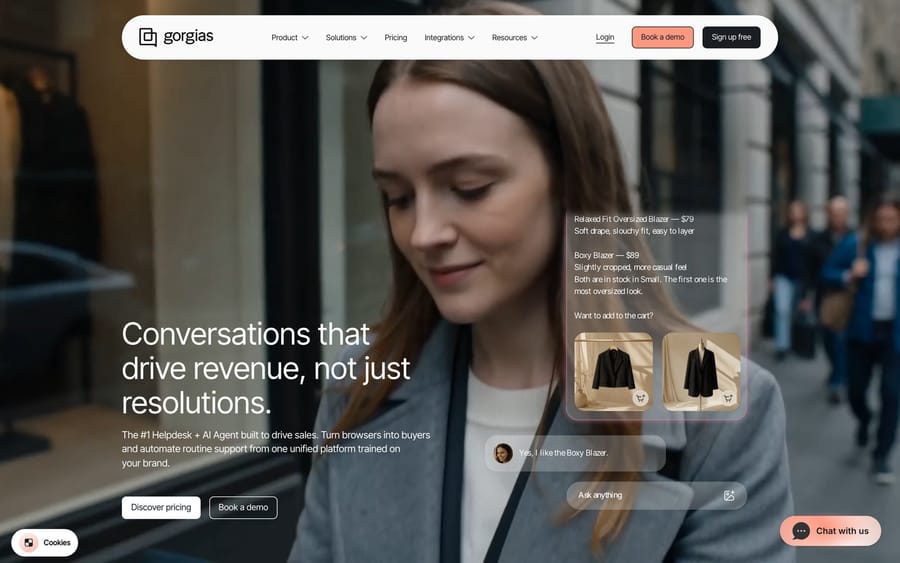
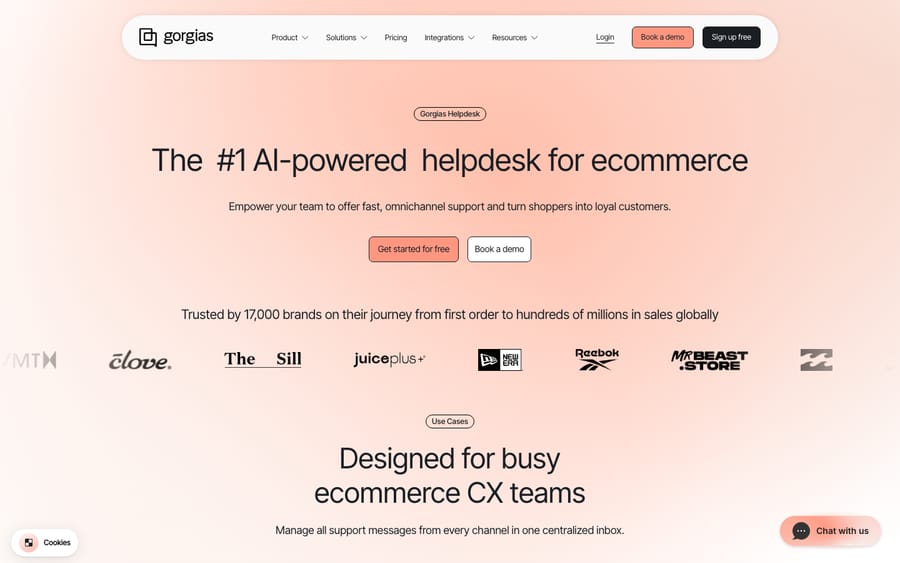
What it is: The help desk built specifically for ecommerce. It plugs into Shopify (plus BigCommerce, Magento and others), pulls order, tracking, refund and subscription data straight into every ticket, lets agents refund or cancel without leaving the inbox, and ties live-chat conversations to revenue. Its AI Agent handles WISMO, returns and product questions end to end, and can cancel orders or apply discounts on the paid tiers. Ecommerce fit: Best-in-class. Nothing else on this list is this purpose-built for a Shopify store's order-ops workflow. Who it wins for: Shopify and DTC brands whose inbox is dominated by order-related tickets and who want native ecommerce features over a configurable general platform. (For the deep dive, see Gorgias for Shopify.) Pricing model: Ticket volume, not seats. The Gorgias pricing page lists helpdesk-only plans at Starter $10/mo (50 tickets, monthly only, 3 user seats), Basic $60 ($50 annual, 300 tickets), Pro $360 ($300 annual, 2,000) and Advanced $900 ($750 annual, 5,000), with overage from $0.36 to $0.40 a ticket. The AI Agent is on every plan and charged per automated interaction: $1.00 on Starter, $0.90 on Basic and Pro, $0.85 on Advanced. Plans bundled with AI Agent run from $40 to $1,430 a month and add $1.50 per automated interaction past the included allowance. Note the incentive: Gorgias earns on both the ticket and the automated interaction, so a heavy AI month raises the bill on two meters. Rating: G2 4.6/5; Capterra 4.6/5 (134 reviews). What users say: "Everything is built around Shopify workflows which is exactly what you need." (Sr Manager, Digital Marketing, Capterra, April 2026.) The consistent praise is the Shopify integration and ease of use; the consistent gripe is cost at volume (the value-for-money score trails ease of use), since ticket and AI billing can spike on a busy month. If that model is your sticking point, our best Gorgias alternatives breakdown covers the swaps.
2. Zendesk, the scalable, ecosystem-rich platform
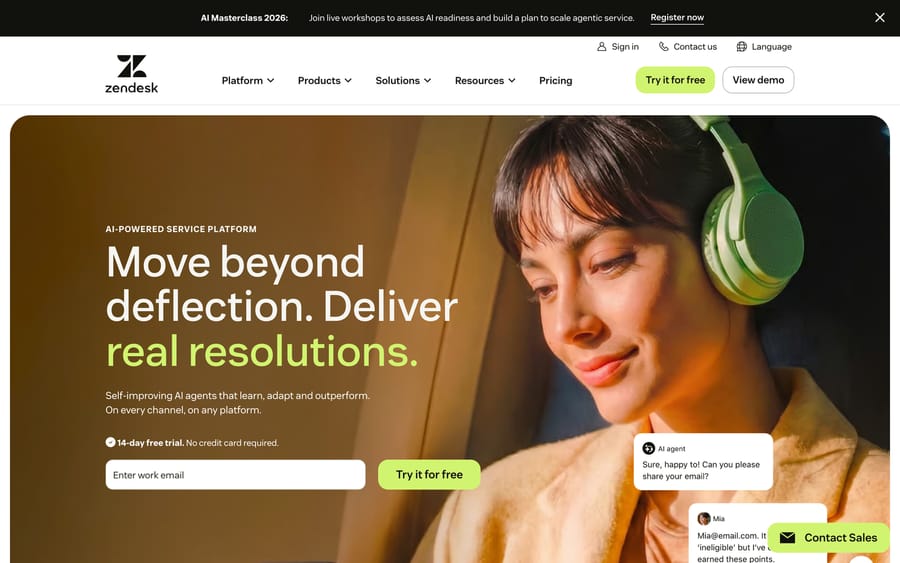
What it is: The category heavyweight: a deep, extensible support platform with omnichannel ticketing, a huge app marketplace (including Shopify), mature reporting, and native AI agents that can check order status, process returns and update records in connected systems. Ecommerce fit: Strong, but earned rather than native. You connect the Shopify integration and configure AI to read order data, rather than getting it as the whole product. Who it wins for: Brands outgrowing ecommerce-only ticketing that want configurability, analytics horsepower and a big ecosystem, and have the budget. Pricing model: Per agent: Support Team $19, Suite Team $55, Suite Professional $115/agent/month (annual). Zendesk's pricing page says AI agents are billed per automated resolution and lists the rate: $1.50 committed and $2.00 pay-as-you-go. Its plan table includes 5 automated resolutions per agent a month on Support Team and Suite Team and 10 on Suite Professional; Zendesk's help center describes that allowance as a monthly dollar amount per seat, in place since May 18, 2026 ($2, $5 or $10 by plan, capped at $5,000 a year), and Copilot is a $50/agent/month add-on on Suite Professional and above. Rating: G2 4.3/5 (~6,707 reviews). What users say: Reviewers consistently praise depth, flexibility and the app ecosystem; the recurring critique is cost and setup complexity for smaller teams (aggregate G2/Capterra sentiment, June 2026).
3. Freshdesk, the budget omnichannel option
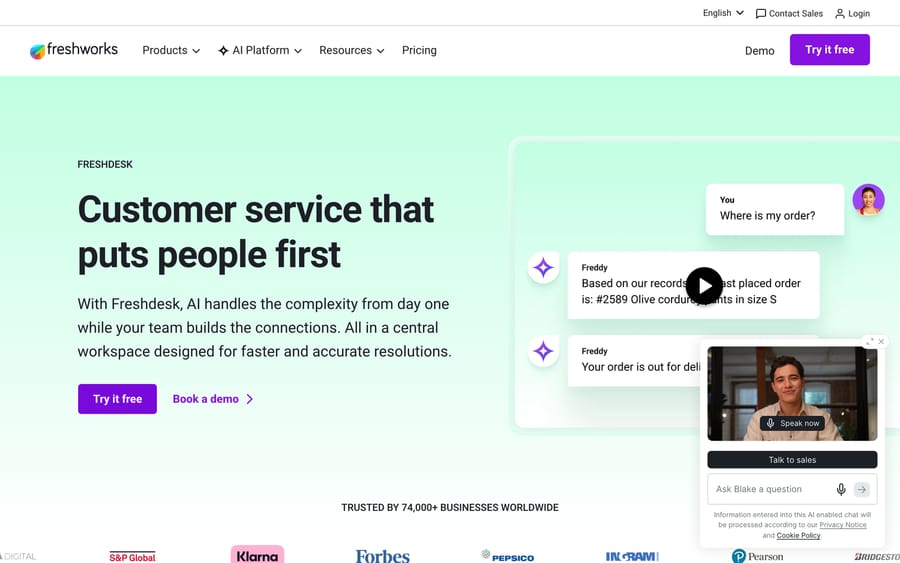
What it is: Freshworks' affordable, quick-to-deploy help desk with omnichannel ticketing, automation and the Freddy AI add-ons. A solid general-purpose tool that handles ecommerce via integration rather than DTC-native design. Ecommerce fit: Good for stores whose support is more conversational than order-ops-heavy; you'll connect Shopify rather than get native order panels out of the box. Who it wins for: Cost-conscious teams that want broad channel coverage and simple per-seat pricing without enterprise complexity. Pricing model: Per agent, annual. Standalone Freshdesk (email ticketing) is Growth $19, Pro $55 and Enterprise $89; Freshdesk Omni (email, chat, phone and messaging) is $29, $79 and $119. There's no free plan on the pricing page any more, only a 14-day trial and a separate Free program for up to 2 agents for 6 months. Freddy AI is separate: Copilot is $29/agent on Pro and Enterprise, and Freddy AI Agent includes 500 sessions as a one-time allowance per account, then costs $49 per 100 sessions. Rating: G2 4.4/5 (~3,728 reviews). What users say: Reviewers like the value and fast setup; common complaints are reporting depth and that the best AI and automation sit behind higher tiers and add-ons (aggregate sentiment, June 2026).
4. Re:amaze, the closest Shopify-native like-for-like
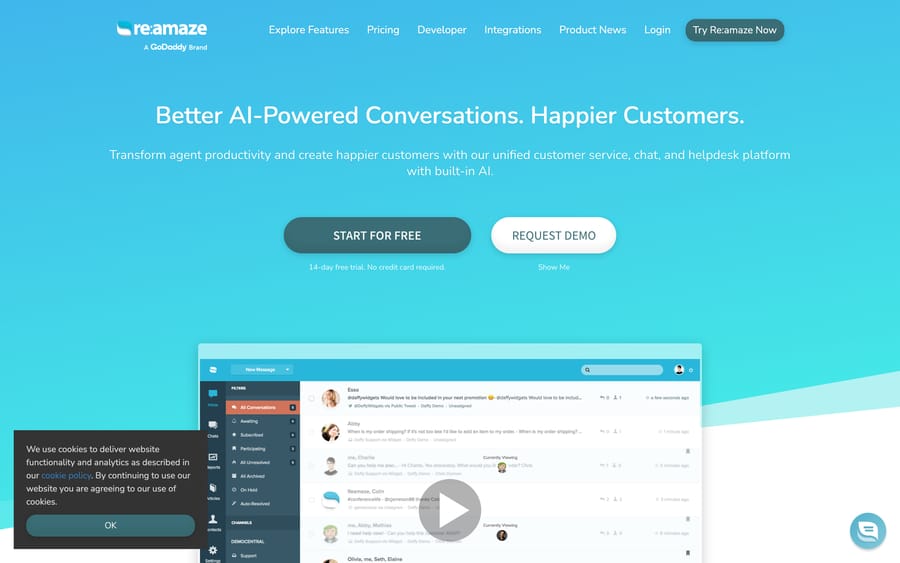
What it is: A Shopify-focused help desk with email, chat, social, FAQ and push campaigns, plus order lookups, returns and customer data pulled into the inbox, much like Gorgias, often at lower cost. Ecommerce fit: Native and strong. Order info surfaces automatically in the conversation, which is exactly what a DTC agent needs. Who it wins for: Shopify and DTC brands that want Gorgias-style ecommerce features with simpler per-seat (or flat) pricing. Pricing model: Per user: Basic $29, Pro $49, Plus $69/user/month ($26.10, $44.10 and $62.10 on annual billing), plus a $59 flat-rate Starter plan for unlimited team members, capped at 500 responded conversations a month. AI resolutions are included (5, 10 or 20 per user a month by plan), then $0.85 each. SMS and voice run through Twilio/Aircall at their own rates. Rating: G2 4.6/5 (~139 reviews; Capterra ~4.7). What users say: "When our customers connect with us, our service staff immediately sees any relevant order information. This helps us provide a great customer experience." (verified Capterra review.) Praise centers on the Shopify integration and responsive support; the flip side is a smaller ecosystem and less polished AI than Gorgias's AI Agent.
5. Richpanel, the self-service-first help desk
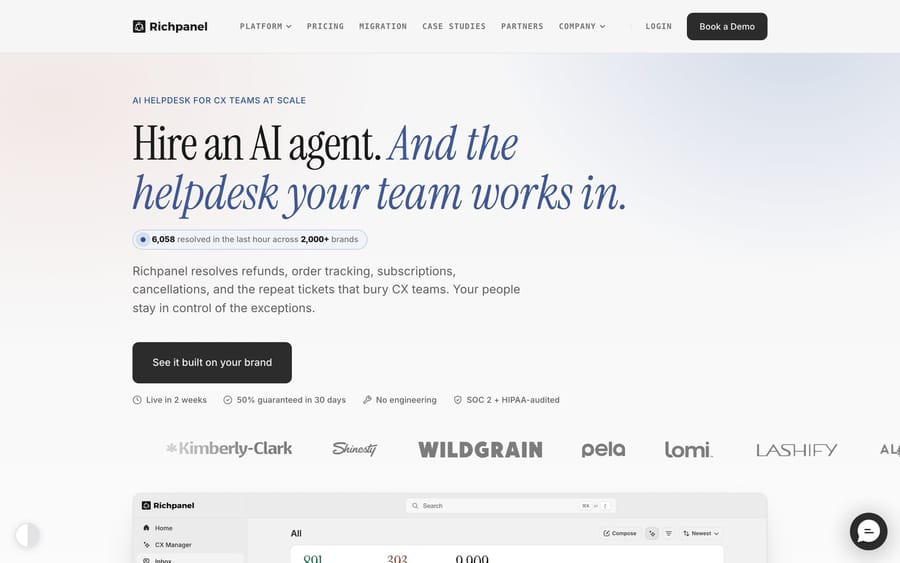
What it is: An ecommerce help desk built around a self-service portal that lets shoppers track orders, start returns and resolve common issues without an agent, designed to cut ticket volume at the source, with AI agents that work across email, chat, social, SMS and WhatsApp. Ecommerce fit: Strong on deflection. If your queue is mostly repetitive WISMO and returns, the portal can shrink it. Who it wins for: DTC brands that want to deflect repetitive questions before they become tickets. Pricing model: Richpanel has dropped its three tiers. The pricing page now shows one helpdesk seat at $99 per seat per month (17% less on annual billing) and AI agents at $0.20 per AI-handled conversation, with a choice of Claude, GPT or Gemini models. The self-service portal, QA AI and social media agent are now listed as included at no extra cost, which reverses the old separate portal fee. Returns and exchanges start at $99 a month. Rating: G2 4.7/5; Capterra 4.7/5 (~93 reviews). What users say: Reviewers highlight strong, responsive support and effective deflection; older reviews complain that portal and order-based fees stacked on top of the seat price, which the current pricing page no longer shows (aggregate G2/Capterra sentiment, June 2026).
6. eDesk, the multichannel marketplace specialist
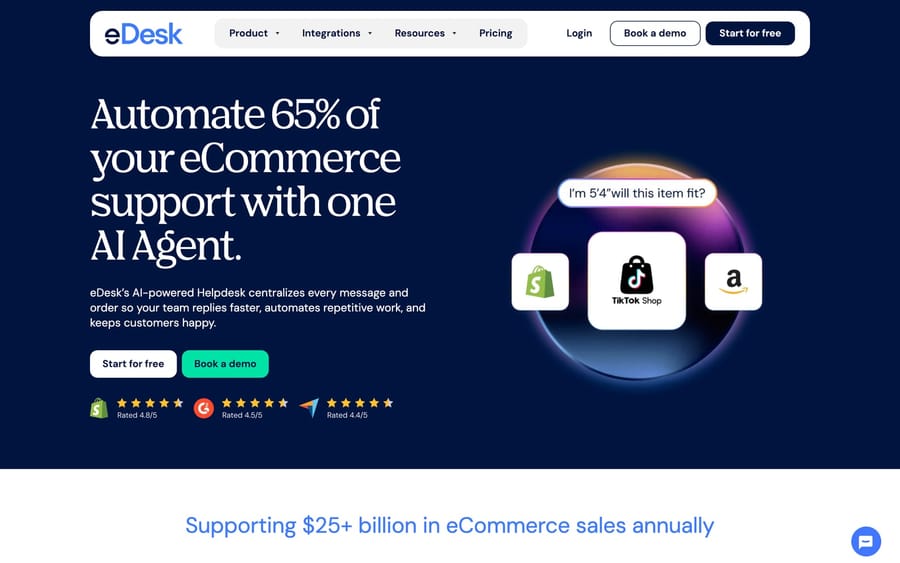
What it is: A help desk built for marketplace sellers, with native connections to Amazon, eBay, Walmart, Etsy, TikTok Shop and 200+ channels (alongside Shopify), pulling messages and full order data into one Smart Inbox, with per-marketplace SLA and feedback tools. Ecommerce fit: Best on this list if you sell beyond your own store. Where Gorgias is Shopify-first, eDesk is marketplace-first. Who it wins for: Brands selling across marketplaces that need a single inbox spanning all of them. Pricing model: Per user: Essential $39, Growth $89, Professional $119/user/month on annual billing, or $49, $115 and $149 monthly. Essential covers 1 store or marketplace, Growth 5 and Professional 10, so adding channels pushes you up tiers fast. The AI Agent is included in every plan and charged at $0.99 per outcome (a reply or a real action); AI Assist and AI Translation are add-ons without a published price. Rating: G2 ~4.6/5 (~72 reviews, approximate, derived from the review distribution). What users say: Reviewers call it user-friendly and a big time-saver for multichannel inboxes; the common complaint is that annual price increases can be hard to justify (aggregate sentiment, June 2026).
7. Gladly, the people-centered premium platform
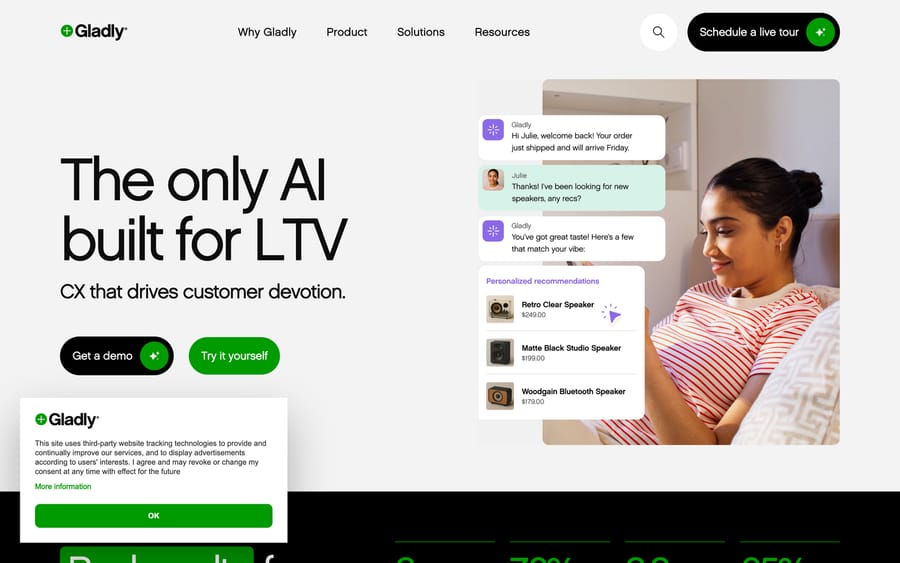
What it is: A customer-service platform with no tickets: conversations are organized around the person across voice, chat, email and social, with AI built for lifetime value. Strong on voice. Ecommerce fit: Premium retail. Built for high-touch brands where every conversation is a relationship, not a case. Who it wins for: Premium, high-touch, often voice-heavy retail and DTC brands. Pricing model: Custom only. Gladly's pricing page (now at gladly.ai) publishes no plan names, per-user prices or minimums; you get a number from a demo. Older third-party figures for per-user prices and agent minimums still circulate, but Gladly doesn't confirm them, so budget as an enterprise purchase with implementation on top. Rating: G2 4.7/5 (~1,096 reviews), one of the highest-rated and most-reviewed here. What users say: Reviewers love the people-centered model and agent experience; the watch-outs are the enterprise price floor and that it's overkill for a small store (aggregate sentiment, June 2026).
8. Kustomer, the relationship-led CRM platform
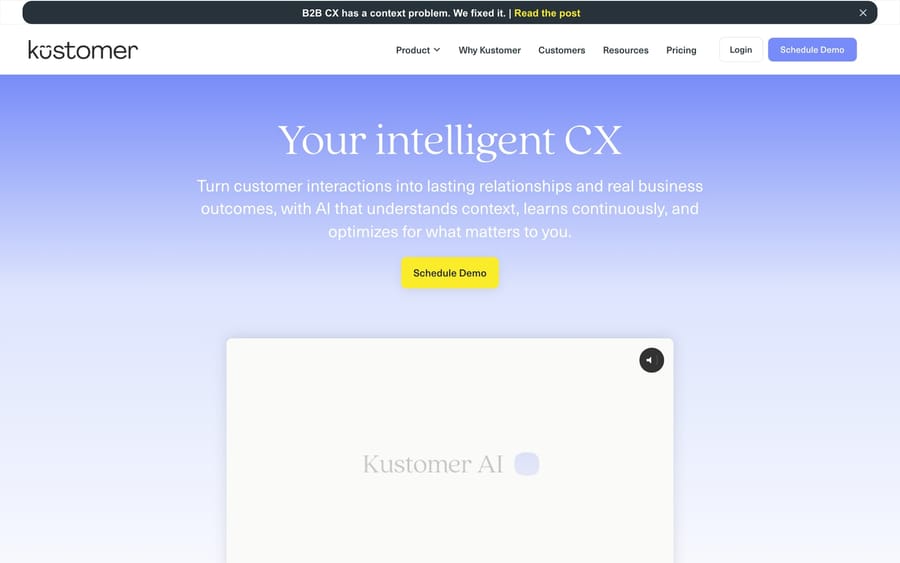
What it is: A customer-service CRM that organizes support around a single real-time customer timeline (orders, conversations, loyalty, shipping) rather than a ticket built around the latest order. Ecommerce fit: Best for high-LTV, relationship-led brands that have outgrown ticket-per-order thinking. Who it wins for: Mid-market and enterprise DTC brands wanting relationship-led, high-LTV support. Pricing model: Custom. Kustomer's pricing page now says it doesn't post one-size-fits-all pricing and routes you to an ROI calculator and a sales call instead of the per-seat tiers it used to list. Voice and WhatsApp are pay as you go, and HIPAA and implementation services are separate add-ons. Rating: G2 4.5/5 (~551 reviews). What users say: Reviewers praise the unified customer view and flexibility; the recurring critiques are a high price floor and a steeper setup than a plug-and-play Shopify tool (aggregate sentiment, June 2026).
9. Help Scout, the simple, human-first inbox
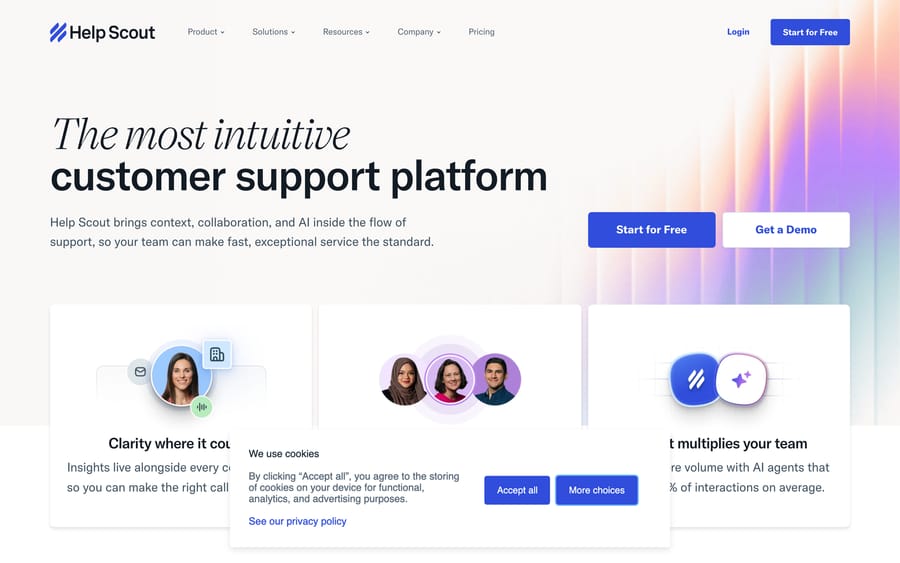
What it is: A clean, conversation-style help desk built around a shared inbox, knowledge base (Docs) and live chat (Beacon), with AI layered in. It hides the "ticket" machinery to feel like email. Ecommerce fit: Lighter on native order data than the specialists, but good for brands whose support is more conversational than order-ops-heavy. Who it wins for: Small to mid-sized DTC and services teams that find ticketing tools heavy and want a warm, personal customer experience. Pricing model: Per user: Standard $25, Plus $45, Pro $75/user/month, with a free plan for up to 5 users, 1 inbox and 100 contacts a month. AI Answers is $0.75 per resolution, and extra inboxes are $10 a month on annual billing. Rating: G2 ~4.4/5 (400+ reviews); Capterra 4.6/5. What users say: Reviewers consistently praise the simplicity, fast onboarding and friendly UX; the trade-off they note is ecommerce depth. It doesn't pull order data into the conversation the way Gorgias or Re:amaze do natively (aggregate sentiment, June 2026).
10. Tidio, the chat-first budget pick
What it is: A lightweight, chat-led tool pairing live chat with its Lyro AI agent and ecommerce-friendly automations. Connects cleanly to Shopify. Ecommerce fit: Good for chat-led stores wanting a fast widget plus AI, lighter than a full ecommerce help desk's order-ops tooling. Who it wins for: Small DTC brands and startups that want a chat widget and some AI without a full help-desk price tag. Pricing model: Conversation-based, not per seat. The Tidio pricing page shows Free (50 billable conversations a month), Starter at $24.17 a month billed annually (100 conversations, including 50 Lyro conversations), Growth from $49.17 (from 250 conversations), Plus from $300 a month plus usage fees, and Premium on request. Lyro on its own starts at $32.50 a month for 50 AI conversations. Plus used to start at $749, so the gap between Growth and Plus is much smaller than older roundups say. Rating: G2 4.7/5; Capterra 4.7/5. What users say: Reviewers love the easy setup and value at the low end; the common complaint is conversation-based cost rising unpredictably with volume (aggregate sentiment, June 2026).
Can you add AI to the help desk you already run?
A disclosure: we make an AI product, and it's not one of the ecommerce help desks above. Macha is an AI agent layer that runs on top of the help desk you already use: Zendesk, Freshdesk, Gorgias, Front, HubSpot or Intercom today, with the current list on our integrations page. It does not integrate with Re:amaze, Richpanel, eDesk, Kustomer, Gladly or Tidio.
So this is relevant if your store runs on a help desk Macha connects to. In that case, Macha reads the customer's actual question, pulls from your connected order and CRM data (Shopify is a live connector) and your help center, and resolves routine WISMO and returns tickets inside your existing workflow: drafting the reply, looking up the order, tagging, routing. When it isn't confident it hands off to a human with full context. On pricing, it bills per ticket (one conversation, charged once however many steps the agent takes) rather than per resolution or interaction, on one plan that starts at $299 a month for 750 tickets with setup and monitoring by our team included. Outcomes vary with how good your connected data is; a ticket is something you can count. If your store is on Gorgias, here's how the layer works, and you can start with $50 of free usage, no credit card required. If you're on Re:amaze, Richpanel, eDesk or Tidio, it doesn't apply.
How do you choose the right ecommerce help desk?
- Match the tool to your sales channels. Shopify-only and want deep native ecommerce features? Gorgias (or Re:amaze for a cheaper like-for-like). Selling across Amazon/eBay/Walmart? eDesk. Chat-led and tiny budget? Tidio.
- Name your cost driver. Lean team, high ticket volume? Gorgias's ticket-based model (500 user seats from Basic up) can win, but model peak-month tickets and automated interactions. Want predictable bills as volume swings? A per-seat tool (Re:amaze, Zendesk, Freshdesk, Help Scout) is steadier. Watch conversation-based models (Tidio) at scale.
- Decide ticket vs. relationship. If you think in tickets-per-order, the specialists fit. If you want a unified customer timeline for high-LTV support, look at Kustomer or Gladly.
- Prioritize WISMO/returns deflection. If repetitive order questions dominate, weigh AI quality and self-service heavily: Gorgias, Richpanel (portal), or, on Zendesk/Freshdesk, an AI layer like Macha.
- Model the total cost at your real volume. The sticker price is rarely the bill. Add AI (per interaction, per outcome, per conversation or per session), channel fees (Re:amaze's Twilio/Aircall) and implementation for the custom-priced suites (Kustomer, Gladly).
- Pilot on a real slice of your queue, during a normal and a busy week, and measure resolution rate, CSAT and cost per resolution before you migrate.
Frequently asked questions
What is the best help desk for ecommerce in 2026? It depends on your channels and cost model. Gorgias is the most Shopify-native and the default for DTC brands; Re:amaze is the closest cheaper like-for-like; Zendesk is the deepest, most extensible platform; Freshdesk is the budget omnichannel pick; eDesk owns multichannel marketplace selling; Richpanel leads on self-service deflection; Kustomer and Gladly are the relationship-led, premium options; Help Scout wins on simplicity; and Tidio is the chat-first budget pick.
What is the best help desk for Shopify specifically? Gorgias is the most purpose-built for Shopify: order, refund and subscription data flow natively into the ticket and agents can act on orders without leaving the inbox. Re:amaze is the closest cheaper alternative with similar native Shopify integration; Richpanel adds a self-service portal for order tracking and returns, now included in its $99 seat. See our Gorgias for Shopify guide.
How do ecommerce help desks handle "where is my order" (WISMO) tickets? The good ones read live order and tracking data and either surface it instantly for agents or auto-resolve the question with AI before a human is involved. Gorgias, Re:amaze and Richpanel do this natively; on Zendesk or Freshdesk you connect the store data and add an AI layer to resolve WISMO automatically.
Is there a cheap help desk for a small online store? Yes. Tidio (free tier; Starter $24.17 a month billed annually) is the most budget-friendly for chat-led stores; Re:amaze ($29/user or a $59 flat Starter plan for unlimited members up to 500 responded conversations), Help Scout (free for up to 5 users, then $25/user) and Freshdesk ($19/agent standalone on annual billing) are affordable general-purpose options. Freshdesk no longer lists a free plan. Always add AI and channel costs before comparing.
Does Macha work as an ecommerce help desk? No. Macha is an AI agent layer that runs on top of the help desk you already use (Zendesk, Freshdesk, Gorgias, Front, HubSpot or Intercom today). It's not a standalone help desk, and it does not integrate with the other ecommerce-native tools here (Re:amaze, Richpanel, eDesk, Tidio). It's relevant if your store already runs on one of those desks, in which case it can layer on top to resolve routine WISMO and returns tickets.
What's the short answer for most stores?
Start from your channels. A Shopify-only brand should price Gorgias first and Re:amaze second; a marketplace seller should start with eDesk; a store that wants a general platform should compare Zendesk and Freshdesk; a high-touch brand with a big team should get quotes from Kustomer and Gladly; and a small chat-led store can start free on Tidio or Help Scout. Then price your busiest month, tickets plus AI, on each shortlisted tool, and pilot on live tickets, including a busy week, before you commit.
Pricing re-checked on vendor pages on September 24, 2026; ratings and review sentiment from June 2026. Ecommerce help desk and AI pricing changes fast, so confirm current terms on each vendor's site before buying.
Resolve tickets automatically with AI agents
Macha's AI agents work on top of the help desk you already use — no code.