



 Intercom
 Shopify
 Stripe
 Slack
Slack Notion
 Google Workspace
 Confluence

What Is an AI Agent for Customer Support? (2026 Guide)


An AI agent for customer support is an LLM-powered system that understands a request, answers from your own knowledge, takes actions to resolve it and hands off to a human when needed. The ability to act, not just chat, is what separates it from the scripted chatbots most people picture.
Key takeaways
- An AI agent for customer support is an LLM connected to your knowledge and systems that answers, takes actions such as refunds or order lookups, and hands off to a human.
- AI support tools fall into three tiers: a scripted rule-based chatbot, a RAG answer bot that only answers, and an autonomous agent that also takes actions through tools and APIs.
- IrisAgent says ungrounded models hallucinate in 15 to 30% of customer service responses and its own engine cuts that to under 5%, a vendor figure rather than an independent benchmark.
- Teams can get an AI support agent three ways: native help desk AI, an AI agent layer on top of the existing help desk, or a standalone AI-first platform that requires migration.
- Salesforce completed its acquisition of Fin, the company formerly called Intercom, on September 10, 2026, in a deal worth about $3.6 billion.
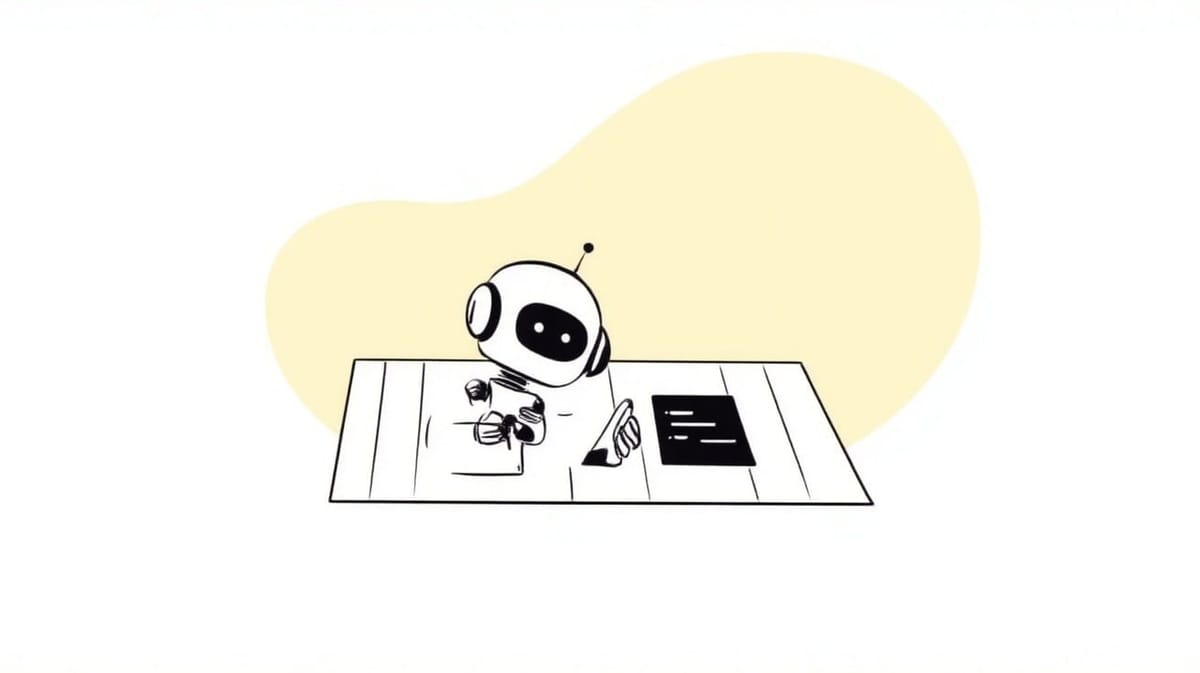
An AI agent for customer support is a large language model (LLM) connected to your knowledge and your systems so it can read a customer's request, answer from your own sources, take actions such as a refund or an order lookup, and hand off to a human when it isn't sure. The action step is what separates it from a chatbot: a scripted bot follows a decision tree, a RAG answer bot only answers, and an agent does the work.
| Tier | How it decides | Can it take actions? | Typical use |
|---|---|---|---|
| Scripted chatbot | Rules, keywords, decision tree | No | Routing, the narrowest FAQs |
| RAG answer bot | LLM grounded in your knowledge base | No, it answers only | How-to and policy questions |
| Autonomous AI agent | LLM plus knowledge plus tools | Yes, through APIs, with guardrails | Order status, refunds, account changes, triage |
How is an AI agent different from a chatbot or an answer bot?
Almost every product in this space is one of three things, and the gap between them is enormous. Thinking in tiers is the fastest way to cut through the marketing.
- Tier 1: the scripted chatbot. Rule-based or keyword-driven. It follows a predefined decision tree ("Press 1 for billing"), matches phrases to canned responses, and breaks the moment a customer phrases something it didn't anticipate. It can't take actions outside the chat window. This is the bot that frustrates everyone — useful for routing and the narrowest FAQs, useless for anything novel.
- Tier 2: the RAG answer bot. Powered by an LLM and grounded in your knowledge base via retrieval-augmented generation (RAG). It reads the customer's actual question, retrieves relevant articles or past tickets, and writes a fluent, specific answer. This is a real leap — it answers instead of deflecting to a link. But, as alhena puts it, RAG bots "are great at answering questions, but they stop there." They inform; they don't do.
- Tier 3: the autonomous AI agent. An answer bot that can also take actions. It plans a multi-step path to resolve the issue, calls tools and APIs (look up an order, process a refund, reset a password, update a record), checks its own intermediate results, and escalates to a human when it isn't confident. Zendesk, Cognigy, and IrisAgent all draw the line here: the agent doesn't just understand intent, it acts on it across multiple steps.
When a vendor says "AI agent," your first question should be: which tier is this, really? A lot of "agents" are Tier 2 answer bots — genuinely useful, but not autonomous. The word has been stretched thin.
How does an AI support agent actually work?
Strip away the branding and a modern AI support agent is four components working together. Understanding them tells you exactly where these systems shine and where they fail.
- The LLM (the reasoning engine). A large language model interprets the customer's message — intent, sentiment, the actual question buried in a rambling email — and generates the response. This is what makes the agent flexible instead of brittle. But on its own, an LLM only knows its general training data, not your return policy or this customer's order. Used alone, it will confidently make things up.
- Knowledge grounding (RAG). This is the fix for that problem and the most important piece. Retrieval-augmented generation connects the LLM to your sources — help center, docs, policies, past tickets, product data — and forces it to answer from retrieved facts rather than its imagination. As Ada and IrisAgent both stress, an agent's quality ceiling is set entirely by the knowledge it can reach. Garbage in, confident garbage out. (See this practical guide to connecting your knowledge base to an AI agent.)
- Tools and actions. What elevates an answer bot to an agent. Through API integrations, the agent can do things: query an order-management system, issue a refund, tag and route a ticket, update a CRM field, trigger a workflow. This is where real resolution happens — not "here's how to track your order" but "your order shipped this morning, here's the tracking link," fetched live.
- Guardrails and human handoff. The safety layer. Guardrails define how far the agent can go autonomously and when it must stop. A common, sensible pattern (Redis, NVIDIA NeMo Guardrails) is reversibility-based: let the agent autonomously do reversible, low-risk things (answer a question, tag a ticket), but require human approval for irreversible or high-stakes ones (issue a large refund, delete data, send a binding external message). And when the agent isn't confident — or the customer asks for a person — it should escalate cleanly, with full context attached, rather than looping.
Put together: the LLM reasons, RAG grounds it in truth, tools let it act, and guardrails keep it safe. Remove any one and you get a familiar failure mode — a brittle bot (no LLM), a hallucinating one (no grounding), a talker that can't help (no tools), or a loose cannon (no guardrails).

What's the difference between an AI agent and an AI copilot?
This is the other distinction worth nailing, because the two are built for opposite jobs.
- An AI agent is customer-facing and autonomous. It works the ticket itself, talks to the customer, and resolves what it can without a human in the loop.
- An AI copilot is agent-facing and assistive. It sits inside your team's helpdesk and helps the human — drafting suggested replies, summarizing long threads, surfacing relevant articles, recommending next actions. The human reviews, edits, and sends.
Microsoft, IrisAgent, and Helpshift frame it the same way: an agent replaces a unit of work, a copilot augments it. Neither is better in the abstract — they solve different problems. Copilots are lower-risk and a natural starting point because a human is always the last check; agents deliver more leverage on high-volume, repetitive tickets but demand better knowledge and tighter guardrails. Many mature support orgs run both: agents handle the front-line repetitive load, copilots make human agents faster on everything that escalates.
What can an AI support agent do, and what can't it do?
Honest expectations are everything here. Here's the unhyped version.
What it does well:
- Resolves repetitive, well-defined tickets end to end — order status, password resets, returns, "how do I…", account changes — the long tail of questions that dominate most queues.
- Takes real actions via API, so resolution is concrete (refund processed, address updated) rather than a pointer to instructions.
- Works 24/7 and multilingual, answering instantly at 3 a.m. in the customer's language.
- Operates multichannel — chat, email, in-app, sometimes voice — from the same knowledge.
- Escalates with context, handing the human a summary instead of a cold transfer.
What it can't do (and any honest vendor will admit):
- It can't answer what your knowledge doesn't contain. No documented policy, no reliable answer. The agent is a retrieval-and-reasoning layer, not an oracle.
- It can hallucinate — state a plausible-sounding policy that doesn't exist — especially when grounding is weak or the question falls outside its sources. Vendors report that ungrounded LLMs hallucinate on a meaningful share of answers. IrisAgent says ungrounded models hallucinate in 15 to 30% of customer service responses and that its own validation engine cuts that to under 5%. That is a vendor measuring its own product, not an independent benchmark, and the risk never hits zero.
- It struggles with genuinely novel, ambiguous, or emotionally charged cases — the ones that need judgment, empathy, or a policy exception. These should escalate, by design.
- It isn't magic, and it isn't free to stand up. Quality tracks directly with the effort you put into your knowledge base and configuration. "Plug it in and deflect 70%" is a sales slide, not a starting state.
What are the three ways to deploy an AI support agent?
"Add an AI agent" can mean three architecturally different things. The right choice depends on the helpdesk you already run.
- Native helpdesk AI. The AI agent built into your existing helpdesk by the same vendor: Zendesk AI agents, Fin on Intercom, Freddy AI Agent on Freshdesk. Tightest integration, simplest setup, but you're locked to that vendor's model, roadmap and pricing. Fin sits partly in both camps, since it costs $0.99 per outcome and also runs on help desks other than Intercom, with a 50-outcome monthly minimum there. (See Zendesk AI explained for what the native option covers.)
- An AI agent layer on top. A specialized AI platform that connects to your existing helpdesk and adds the agent without replacing your stack. You keep Zendesk or Freshdesk as your system of record; the AI layer brings the resolution engine. More flexibility and often more capable AI than the native add-on, at the cost of managing one more connected tool.
- Standalone AI-first platform. A newer all-in-one where the AI agent is the product and the ticketing is built around it. Powerful and coherent, but adopting one usually means migrating off your current helpdesk — a much bigger commitment.
Update (September 2026): Salesforce completed its acquisition of Fin on September 10, 2026, in a deal worth about $3.6 billion. Fin is the company that renamed itself from Intercom on May 12, 2026; Intercom lives on as its help desk product. Salesforce cites a 76% average resolution rate for Fin. Worth weighing in any long-term Intercom or Fin decision.
Most teams that already live in Zendesk or Freshdesk land on the native add-on or the layer-on-top model, because neither requires ripping out the system their workflows depend on.
A quick, honest aside: Macha is one example of that "AI layer on top" model — an AI agent that runs on top of Zendesk, Freshdesk, Gorgias, Front, HubSpot or Intercom rather than replacing them. We mention it as a concrete instance of the deployment model, not as the answer; the right tool depends entirely on your stack, your volume, and how good your knowledge is. Macha bills per ticket — one conversation, charged once however many steps the agent takes inside it — rather than per "resolution," because real-world outcomes vary with your knowledge quality; you can try it on a free trial ($50 of usage, no credit card required).
How do you evaluate an AI support agent?
When you're comparing options, score them on these axes — not on the polish of the demo.
- Resolution quality, not deflection theater. Ask for true resolution rate, not just "deflection." A ticket that avoids a human but leaves the customer unhelped isn't a win — it's a deferred, angrier ticket. (This trap is worth understanding in full: see what deflection rate really measures.)
- Knowledge grounding. How does it connect to your sources? How many source types? How does it handle conflicting or stale content? Strong grounding is the difference between accuracy and confident fiction.
- Actions and integrations. Can it actually do things in your systems, or only talk? Which APIs and tools does it support out of the box, and how hard is a custom one to wire up?
- Guardrails and control. What can it do autonomously vs. with approval? Can you set confidence thresholds, restrict high-risk actions, and audit what it did and why? Demand a clean escalation path with context.
- Pricing model. Per-resolution, per-conversation, per-seat, or per-action — each creates different incentives, and the "right" one depends on your ticket mix. Be wary of pricing that charges for outcomes the tool can't always control.
- Honesty about limits. A trustworthy vendor tells you what their agent can't do and what your knowledge base needs to look like first. If the pitch is all upside, that's the red flag.
What are the honest limits before you buy?
The category is real and the technology works for a large slice of support volume. Three sober truths still cut through the hype:
- An AI agent is only as good as the knowledge you give it. This is the whole ballgame. Most "AI failed" stories are really "our knowledge base was thin or outdated" stories. Fix content first.
- Hallucination is a managed risk, not a solved one. Grounding, confidence thresholds, source citations, and human escalation reduce it dramatically — but you architect around it rather than assuming it's gone.
- It augments your team; it doesn't replace judgment. The best deployments let AI handle the repetitive majority and route the nuanced, emotional, exception-laden minority to humans — fast, with context. Aiming for 100% automation is how you end up with the bot everyone hates.
Frequently asked questions
What is an AI agent in customer support? An AI agent is an LLM-powered system that understands a customer's request, finds the answer from your connected knowledge (via RAG), takes actions through integrations to resolve the issue, and hands off to a human when needed — largely autonomously. The defining feature versus a chatbot is that it acts, not just chats.
What's the difference between an AI agent and a chatbot? A traditional chatbot follows scripted rules and a decision tree; it breaks on anything unanticipated and can't take actions outside the chat. An AI agent uses an LLM to reason about the request, grounds its answer in your knowledge, and can perform multi-step actions across your systems to actually resolve the ticket. Many "chatbots" sold today are really mid-tier RAG answer bots — fluent answers, but no actions.
What's the difference between an AI agent and an AI copilot? An AI agent is customer-facing and autonomous — it resolves tickets directly. An AI copilot is agent-facing and assistive — it helps a human agent by drafting replies, summarizing threads, and suggesting next actions, with the human as the final check. Agents replace a unit of work; copilots augment one.
How do AI customer service agents work? Four parts: an LLM reasons about the request; retrieval-augmented generation (RAG) grounds it in your knowledge so it answers from facts; tool/API integrations let it take actions; and guardrails plus human handoff keep it safe and escalate when confidence is low.
Can AI support agents make mistakes or hallucinate? Yes. LLMs can generate confident, plausible-sounding answers that are wrong, especially when knowledge grounding is weak or the question falls outside their sources. Good grounding, confidence thresholds, source citations, and human escalation reduce the risk substantially, but it's managed, not eliminated.
Will an AI agent replace human support agents? No — it shifts what humans do. AI agents handle the high-volume, repetitive, well-defined tickets; humans handle the novel, ambiguous, emotional, and exception cases that need judgment. The strong deployments pair the two rather than aiming to remove people entirely.
So what should you take away?
An AI agent for customer support is the autonomous tier of support AI: an LLM that reasons, grounded in your knowledge so it answers from facts, equipped with tools so it can act, and bounded by guardrails so it knows when to stop and hand off. That's a real, meaningful step beyond the scripted chatbot everyone remembers and beyond the answer bot that only points at links. But it's not magic — its ceiling is your knowledge base, hallucination is a risk you manage rather than one you defeat, and the best results come from pairing autonomous resolution on repetitive tickets with fast, context-rich human escalation on everything else. Pick the deployment model that fits the helpdesk you already run, evaluate on real resolution rather than deflection theater, and demand honesty about limits. Get those right, and an AI agent stops being a buzzword and starts being the part of your support team that never sleeps.
Sources reviewed June 2026, with pricing, the Fin acquisition and the IrisAgent figure re-checked on 24 September 2026; several adoption and accuracy figures are cited secondhand or are vendor-reported — treat them as directional and confirm against your own deployment. Next review by December 2026.
Resolve tickets automatically with AI agents
Macha's AI agents work on top of the help desk you already use — no code.