Intercom
 Shopify
 Stripe
 Slack
Slack Notion
 Google Workspace
 Confluence

Chatfuel: The Complete Guide (2026)


Chatfuel automates WhatsApp, Instagram, and Facebook Messenger conversations for small businesses and, increasingly, for the marketing agencies that resell it to them. This guide covers what the product does, how its pricing and AI-credit system actually work, real ratings from G2, Capterra, and Trustpilot, and how it compares to ManyChat and Chatbase.

We build AI agents for customer service ourselves, for teams running an existing help desk, so treat this as an outside look from a neighboring category.
What is Chatfuel?
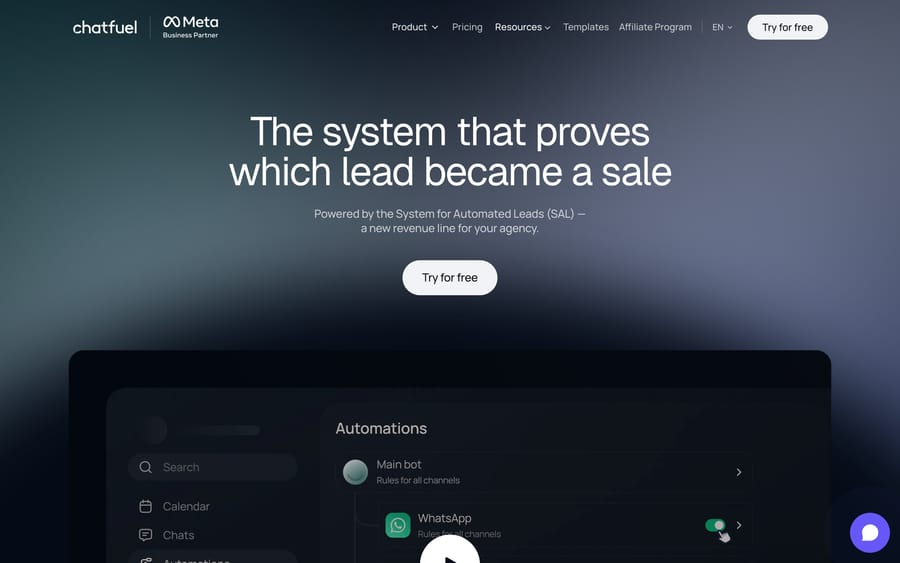
Chatfuel is a chat automation platform, founded in 2015 and a Y Combinator alum, that builds WhatsApp, Instagram, Facebook Messenger, TikTok, and website chat bots for lead qualification and customer engagement. It calls its current product the System for Automated Leads (SAL) and is an official Meta Business Partner. As of a 2022 figure still on its site, the platform had processed over a billion messages a month for more than seven million businesses, a number worth reading as historical scale, since it's the only figure the site currently displays.
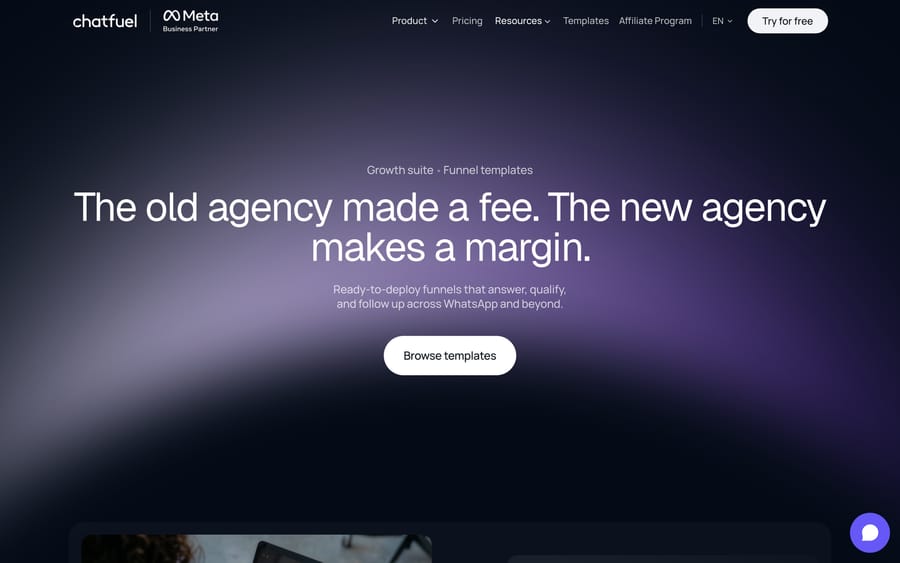
The company's positioning has shifted noticeably toward marketing agencies as resellers, on top of serving individual small businesses. Its templates page states the pitch directly: "The old agency made a fee. The new agency makes a margin," selling Chatfuel's Agency plan as a service an agency marks up and resells to its own clients.
How Chatfuel's AI works
Chatfuel's AI layer is branded Fuely AI. It handles lead qualification, adapting its questions and tone to a business's own communication style, then scores each conversation as hot, warm, or cold and routes it accordingly, whether that means notifying a salesperson, booking a meeting, or continuing the chat automatically. The system also drafts automated replies to comments on posts and Reels, which matters for a business running lead generation through Instagram content as well as ads.
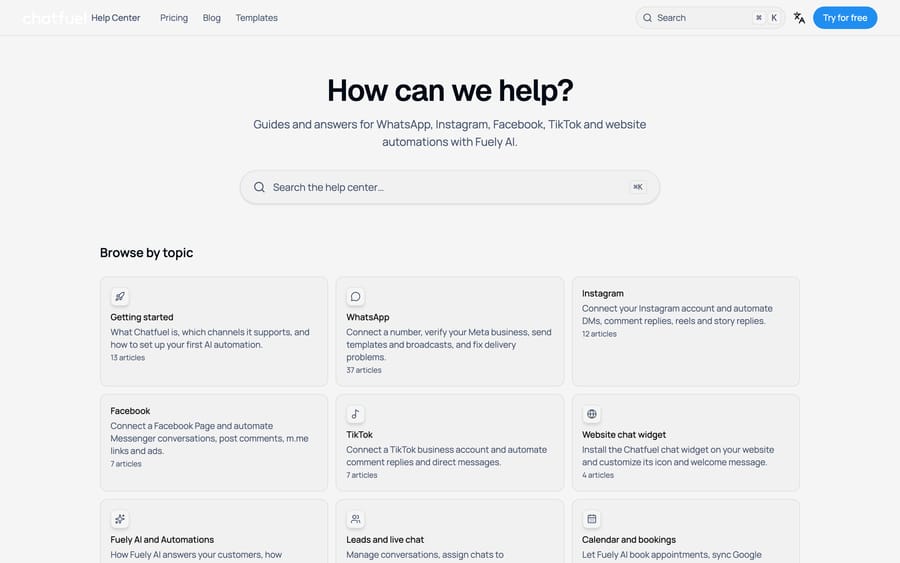
Behind the scenes, a WhatsApp number has to be verified through Meta's business system before Chatfuel can send templates and broadcasts on it, and Chatfuel says it protects accounts from Meta's own ban risk (it claims 99% protection), which is a real operational concern for anyone running WhatsApp automation at volume.
Key features
- Fuely AI lead qualification with hot/warm/cold scoring and automatic routing.
- 136 native CRM integrations, including HubSpot and Salesforce, so a qualified lead lands directly in a sales team's existing pipeline.
- Automated comment replies on Instagram and Facebook posts and Reels, alongside direct-message automation.
- Client reporting built for agencies to show ROI to the businesses they resell Chatfuel to.
- 15+ language support and multiple message formats: text, voice, and image.
Chatfuel pricing
Chatfuel publishes its pricing, which puts it ahead of most vendors in this guide series on transparency alone. The pricing page shows two paid plans. Business has a list price of $69 a month, and a promotion may apply when you sign up: on September 19, 2026 the page showed it at $20 a month, or $18 a month billed yearly ($216/year), under an offer running to September 30. Agency S, aimed at agencies managing multiple client accounts, is $100 a month or $90 a month billed yearly ($1,080/year). Chatfuel's help center lists larger agency tiers from $225 to $2,050 a month and names the tiers differently: its $100 plan is "Agency" and its $225 plan is "Agency S." A free plan covers comment auto-replies on Instagram, Facebook and TikTok.
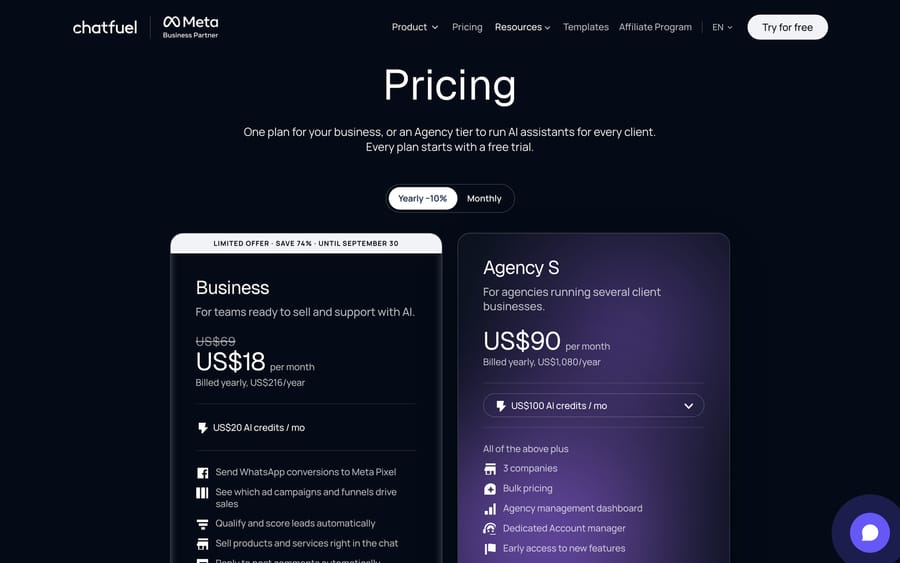
The detail worth reading past the headline price: both plans list a separate line for AI credits, $20 a month included on Business and $100 a month included on Agency S. That's not decoration. The credit goes into a wallet, a balance in US dollars that pays for AI replies and for the WhatsApp template and message fees Meta charges, so the subscription fee buys you the platform plus a fixed monthly allowance, and the wallet is the actual usage-based unit underneath the flat-looking sticker price. Credits don't carry over, and if the wallet runs dry, automations stop replying until it's topped up. Every plan includes unlimited contacts and teammates. Agency S also adds support for three companies, an agency management dashboard, bulk pricing, and a dedicated account manager. Paid plans start with a 7-day free trial, but Chatfuel's own pages disagree on whether you need a card: the pricing page says "No credit card required," while its help-center article on the trial says to "enter your card details to activate the trial," with no charge until the 7 days end.
The incentive behind "reachable contacts"
A recurring theme in Chatfuel's negative reviews comes from its old billing unit. A verified G2 reviewer described their plan creeping from $15 to $66 over three years through five separate automatic increases, because every conversation Chatfuel could still reach counted as a billable "reachable" contact, whether or not that contact was still engaging. A platform billed by audience size grows its own revenue every time your list grows, and the business absorbs that cost unless it prunes its contact list. Chatfuel has since dropped contact-based billing: current plans include unlimited contacts, with "no seat fees, no per-channel fees, and no feature add-ons." The growth risk has moved to the wallet instead. AI replies and WhatsApp fees rise with how much your bot talks, and Chatfuel doesn't publish what one AI reply draws from the wallet, so ask before you commit to a plan based on the number on the pricing page.
Reviews: what G2, Capterra, and Trustpilot show
Chatfuel's ratings vary noticeably by platform: 4.4 out of 5 on G2 from 45 reviews, 4.3 out of 5 on Capterra from 28 reviews (with Ease of Use at 4.1 but Customer Service at a lower 3.7), and a distinctly harsher 3.2 out of 5 on Trustpilot from 14 reviews. Trustpilot's complaints concentrate on billing opacity and dismissive support responses, which lines up with the billing complaint above, made under Chatfuel's old contact-based pricing. On the positive side, reviewers across all three platforms consistently praise the drag-and-drop builder for needing no code and being workable for the core WhatsApp and Messenger use case. We couldn't verify individual reviewer names, roles, or exact dates ourselves, since G2 and Capterra both blocked direct access on every attempt, including through a headless browser, so treat the aggregate ratings as reliable and the specific complaint details as reported, not independently confirmed.
Pros and cons
Pros
- Actually publishes its pricing, including the AI-credit line item, which is rarer than it should be in this category.
- A real, specific AI feature: Fuely AI's hot/warm/cold lead scoring, not a vague "smart automation" claim.
- 136 native CRM integrations and automated comment replies across Instagram and Facebook, on top of direct messages.
- A genuine agency reseller model with client reporting and a dedicated account manager on Agency S.
Cons
- Usage costs run through the wallet, and Chatfuel doesn't publish what an AI reply costs; under the old contact-based billing, multiple reviewers reported their cost climbing as their audience grew.
- Trustpilot's 3.2/5 is a real gap against G2's 4.4/5, concentrated specifically on support and billing complaints.
- Business's list price is $69 a month; lower prices shown on the pricing page are limited-time promotions, not the plan's baseline cost.
- AI credits are a separate, capped allowance on top of the subscription, so heavy AI usage costs more than the sticker price suggests.
Who Chatfuel is best for
Chatfuel fits small businesses and marketing agencies that already run lead generation through WhatsApp, Instagram, or Facebook and want a no-code way to qualify and route those leads, especially agencies that want to resell the platform to their own clients under the Agency S plan. If your lead flow is mostly through Meta's messaging channels and you want CRM handoff without custom development, it's a reasonable, transparently priced option to evaluate.
It's the wrong fit if your conversation volume will grow quickly and you're price-sensitive, since wallet usage (AI replies and WhatsApp fees) rises with your own success and Chatfuel doesn't publish the per-reply rate. It's also the wrong tool if your actual problem is a support team's ticket backlog. That's a help-desk automation problem, priced and built differently.
Chatfuel vs alternatives
| Chatfuel | ManyChat | Macha | |
|---|---|---|---|
| Model | WhatsApp/Instagram/Messenger automation with Fuely AI lead scoring | WhatsApp/Instagram/Messenger automation with a separate AI add-on | AI agent layer on your existing help desk |
| Best for | Small businesses and agencies reselling to clients | Small businesses wanting a large existing user base and template library | Support teams on Zendesk, Freshdesk, Front, or Gorgias |
| Entry pricing | Business $69/mo list (promotions may apply), $20/mo AI credits included | Free plan exists; Pro from ~$29-39/mo for 2,500 contacts | From $299/mo for 750 tickets (~$0.40/ticket), published |
| Billing unit | Plan fee plus a US-dollar wallet for AI replies and WhatsApp fees; unlimited contacts | Active contacts plus a separate AI add-on (~$29/mo) and overage per contact | Tickets, one charge per thread regardless of replies |
| Reviews | G2 4.4/5 (45); Capterra 4.3/5 (28); Trustpilot 3.2/5 (14) | Widely reviewed, mixed on billing transparency | N/A (new category on G2) |
| Self-serve trial | Yes, 7 days; pricing page says no card, help center says a card is needed to activate | Yes, free plan available | $50 of free usage, no credit card |
| Replaces your help desk? | Not applicable; not a help desk product | Not applicable; not a help desk product | No, it deliberately augments it |
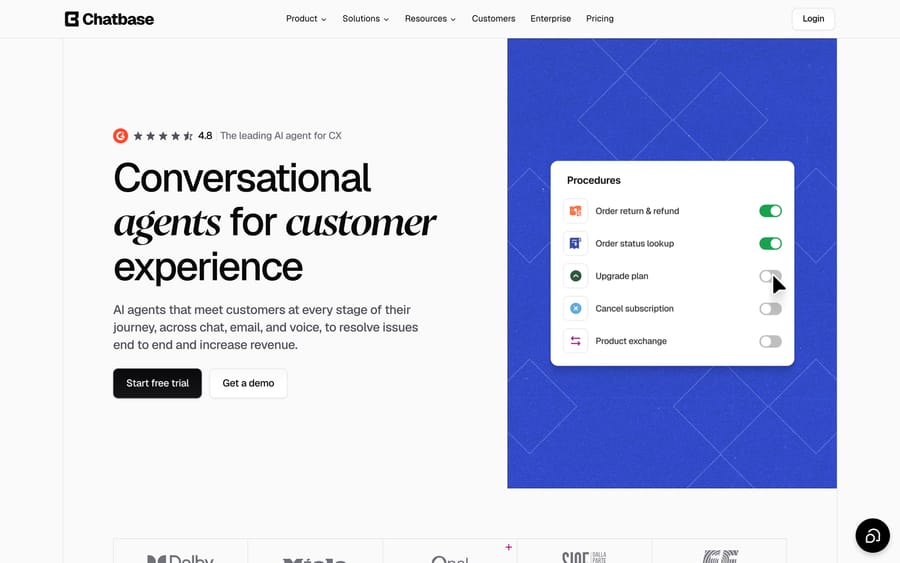
ManyChat is the closer head-to-head competitor: same channels, a similar no-code builder, and a similar tension: a subscription price plus a separate AI add-on and contact-based overages. Chatbase is a different shape of comparable, a website-first AI agent for customer support, worth knowing about if what you actually need is a support agent instead of a sales funnel. Neither replaces a help desk's ticket queue, which is where Macha fits instead, running as an agent layer on top of Zendesk, Freshdesk, Front, or Gorgias and billed per ticket.
How we researched this
We checked chatfuel.com directly (home, /pricing, /templates, and /docs) on 2026-09-17 for current product and pricing claims, including the live promotional pricing banner, and re-checked the plans and wallet rules on 2026-09-19 against the pricing page and Chatfuel's help center. Founding and usage-history claims came from chatfuel.com/about. G2, Capterra, and Trustpilot ratings and the specific billing-creep complaint came from a cached search result; both G2 and Capterra blocked direct access with a Cloudflare 403 on every attempt, including through a headless browser, so we could not independently confirm the exact reviewer or review date behind that complaint. ManyChat's own site returned a Cloudflare bot-check page on every direct attempt, so its pricing here comes from cross-referencing several third-party trackers instead. Chatbase's homepage was fetched directly.
FAQ
What is Chatfuel? A chat automation platform for WhatsApp, Instagram, Facebook Messenger, TikTok, and website chat, built around lead qualification and routing through its Fuely AI feature.
How much does Chatfuel cost? The pricing page shows Business at a $69 list price, with a promotion that may apply (in September 2026 it was $20 a month, or $18 billed yearly), and Agency S at $100 a month or $90 billed yearly. Chatfuel's help center lists larger agency tiers from $225 to $2,050 a month. Each plan includes a monthly credit in a US-dollar wallet ($20 on Business, $100 on Agency S) that pays for AI replies and WhatsApp fees, and contacts are unlimited.
Is Chatfuel good, based on reviews? It varies by platform: 4.4/5 on G2 (45 reviews), 4.3/5 on Capterra (28 reviews), and a notably lower 3.2/5 on Trustpilot (14 reviews), where complaints concentrate on billing and support.
Why do some Chatfuel reviewers complain about billing? Chatfuel used to bill partly by "reachable contacts," so a business's bill could rise automatically as its contact list grew, and at least one verified reviewer reported their plan climbing from $15 to $66 over three years through repeated automatic increases. Current plans include unlimited contacts; usage now draws from a US-dollar wallet instead.
Does Chatfuel have a free trial? Yes, 7 days with $15 of credit. Chatfuel's pages disagree on the card: the pricing page says "No credit card required," while the help-center article on the trial says you enter card details to activate it, with no charge until the trial ends.
What are good alternatives to Chatfuel? ManyChat is the closest direct competitor, covering the same channels, though it still bills by contacts where Chatfuel now uses a dollar wallet. Chatbase is a different category, a website-first AI support agent rather than a WhatsApp lead-gen tool. Neither is a fit for a support team's ticket backlog, which is a help-desk automation problem instead.
Who uses Chatfuel? Marketing agencies (GoSky AI Agency, Tacobot, CodeYE Media, and GrowthBond are named case studies) and, per older company figures, larger brands including Adidas and Levi's.
If your actual bottleneck is a support team's ticket queue rather than a sales chat funnel, see how Macha's pricing works or start a trial.
Sources: Chatfuel, Chatfuel pricing, Chatfuel templates, Chatfuel Help Center, Chatbase, G2 - Chatfuel reviews and Trustpilot - Chatfuel reviews (both block automated fetches, cited via cached search result).
Resolve tickets automatically with AI agents
Macha's AI agents work on top of the help desk you already use — no code.